Episode Transcript
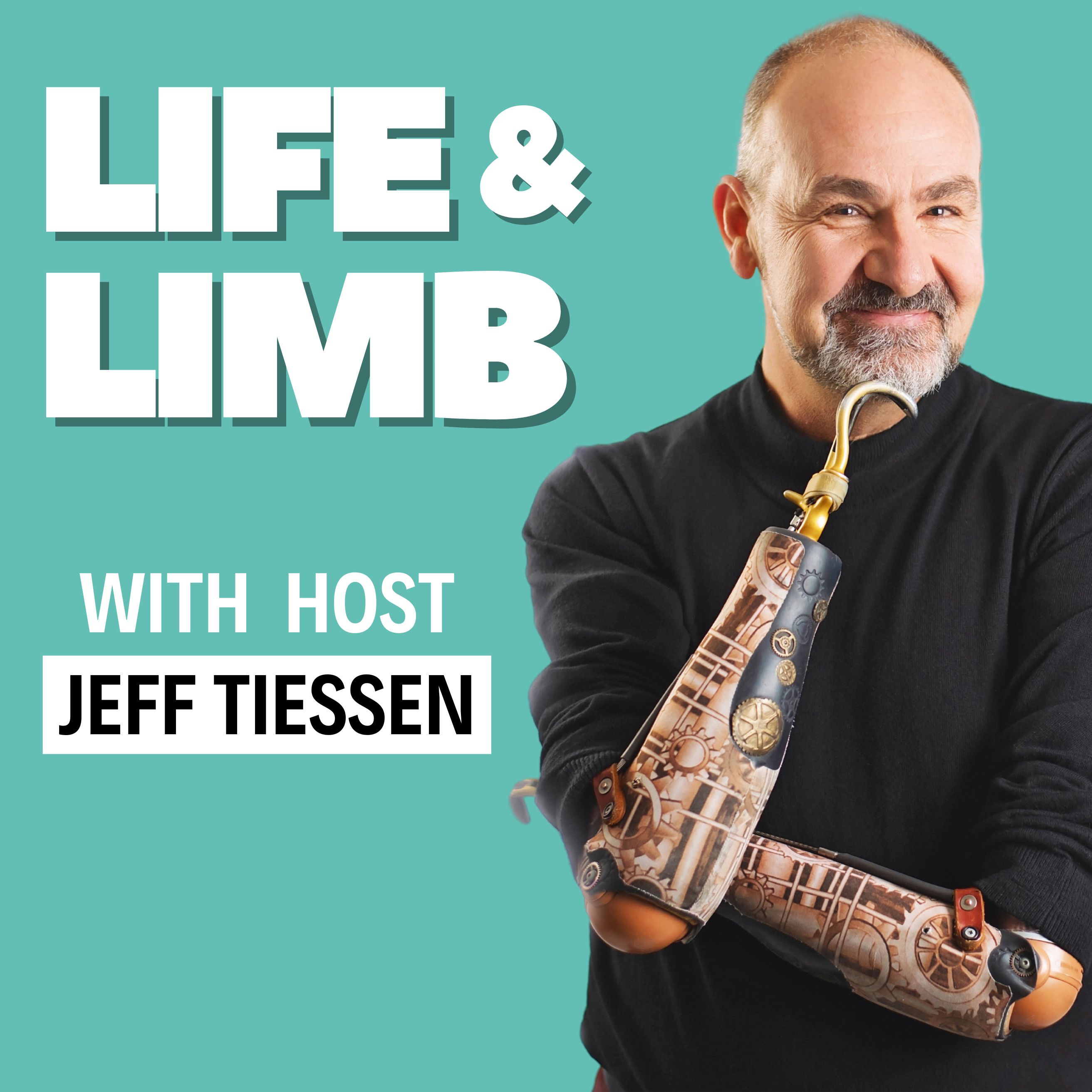
[00:00:03] Speaker A: Welcome to Life and Limb, a podcast from Thrive magazine all about living well with limb loss and limb difference. I'm Jeff Thiessen, publisher of Thrive magazine and your podcast host.
I am really excited to welcome David Burton, my guest this episode.
David has a proven track record of fixing complex problems. He started his career as a mechanical engineer and now leads technical teams on major projects for the B.C. government.
He loves boating and lives the marine Life Daily. For six years now, his 46 foot Bayliner boat in Sydney, British Columbia has been his full time home. He's a sailor, a scuba diver, and was a longtime motorcyclist.
Three years ago, a motorcycle accident changed the course of David's life and led to a difficult recovery.
But rather than letting the amputation of his left leg above the knee become his whole story, he approached limb loss the same way he approaches engineering and technology.
Another problem to work through.
And like good seamanship, he says it's not about proving what you can handle, it's about deciding what you should. David, welcome. How are you?
[00:01:17] Speaker B: Thanks very much. Yeah, I'm good. Thanks Jeff.
[00:01:20] Speaker A: Good.
And as we chat, we're looking out the window of the pilot area of your boat to your neighbor.
[00:01:28] Speaker B: Yeah, we are. And we've got my, my boat captain with me here.
[00:01:32] Speaker A: What's, what's your cat? What's your cat's name?
[00:01:35] Speaker B: Her name is Louisa. She's named after a place in B.C. called Princess Louisa Inlet, which is a really isolated place that's pretty much untouched, hard to get into and hard to get out of. So it's a very memorable place. I took my sons up there a few years ago and then I had this cat and I thought, oh, I know what to call her.
[00:01:55] Speaker A: So, hey, David, let's start with your decision to sell your house and live aboard a boat.
Now, six years, as I mentioned, you know, was it a sudden leap? Was it a midlife experiment? I mean, you obviously knew that come with limits like space and resources, right?
[00:02:14] Speaker B: Definitely. It's interesting because my family used to build boats. My grandfather was a fisherman on the B.C. coast and he built numerous boats in those days. Wooden plank held, double enders most of the time.
And he would, you know, build or rebuild an old boat that had issues, fish it for a season, sell it and do it again. And then in my life when I was younger, my dad and uncle, they were always fixing up a boat. And then that culminated in building a 41 foot fiberglass boat where we bought the components for the boat and put it together.
So boating has always been in my life ever. I mean, as long as I can remember, boating and fishing, and one of my uncles was a pretty famous commercial diver and submarine builder. And so diving was also second nature. So the ocean has always been in my blood.
I raised a couple of kids, got divorced back in 2019, and had the kids with me. And then when they went off to school, you know, I had this house that was just me and a pretty big yard and lots of lawn mowing and stuff. And I thought, you know, maybe I'll.
Maybe I'll move on to a boat. I'd considered it over the years, but it was something that. And briefly, in university, I lived on one of our boats for a couple of months because it was close to school.
So I thought, yeah, you know, it's something I always wanted to do and, and I thought in my retirement I would probably spend a lot of time cruising. So I ended up finding a boat, interestingly, a sailboat, because I'd never sailed before.
And I always felt like a bit of an incomplete boater by not knowing how to sail.
So I very, very foolishly bought a 46 foot sailboat not knowing how to sail.
And the guy, the broker gave me the key and walked down the dock and I was like, all right. And then I looked at all these ropes and equipment that I didn't even know, and, and I thought, you, you might be the stupidest man alive,
[00:04:21] Speaker A: But
[00:04:21] Speaker B: I have some friends that sailed and they recommended I hire an instructor. And so I, I went out, I think two days, and then a couple of weeks later, another full day with him.
He was a great guy and he taught me the basics so then I could make the boat move.
And then there was just a lot of trial and error for, yeah, about three years. And then I had my accident, so I ended up switching to a powerboat because it's easier to live on and easier to maneuver and dock and stuff like that than the, the sailboat was. But I definitely miss. Miss sailing.
[00:04:52] Speaker A: Yeah. So not a whim for sure. It was.
[00:04:55] Speaker B: No, it wasn't a whim.
[00:04:56] Speaker A: Maybe a, a speed bump with the,
[00:04:59] Speaker B: with the sailboat, but a bit of rebellion too, I guess, because my, my ex really didn't like boats and didn't.
And. And you know, I, at the time, I saw it as preventing me from boating. And so there was a bit of a rebound also where I was like, well, now I can do what I want, so now I'm gonna do this.
But yeah, you know, there's a lot of changes compared to having A house, just simple things like getting groceries. You know, from the slip where the boat is to my car is 490 meters.
So when you have two legs and you're walking around, yeah, know, it's, it's still a long walk. But when you're trying to carry groceries with a prosthesis, trying to get out to appointments in winter and all this sort of stuff, it added another, certainly another complexity to, to just trying to live my life. So.
[00:05:50] Speaker A: Yeah, yeah, no doubt. And that's what I wanted to talk to you about too. I mean, I'm a, a boat owner. Boat owner. Love boats, love the water. But, you know, living aboard, it still seems somewhat like a, a fantasy to me and maybe to many others. So, you know, what's it like? Is there, you talk about the compromise of distance. Is there or are there privacy issues? Is there community in the marina? Is it constraining? What's the vibe?
[00:06:16] Speaker B: Yeah, great question, I guess.
Well, it's funny because for the first little while, and I've heard the same thing from people who've recently retired, where they say at first they feel like they're on vacation.
So all of a sudden you're just on this boat and you're like, shouldn't I be going to work and shouldn't I be, you know, so there's a bit of adjustment there in terms of privacy.
Not so much in the evening. You know, after say 6 o' clock at night, the marina really dies down. So I live in a pretty big, pretty popular marina here in Sydney and it gets very quiet at night, which I like.
You know, there's no dogs barking, there's no traffic, there's no, no noise. And in 550 odd slips in the boat, there's only about 22 liveaboards. So there's me and then there's nobody for 10 boats sort of thing.
So it's very, very quiet at night. We do have a community with the liveaboards.
You know, I do Christmas open houses and do the Christmas lights and in the spring sometimes we'll do a kickoff or just get together for dinner, things like that. So there's a real strong sense of community. I think one of the neatest things about living on a boat is for, I would say most people, their marina is their happy place, their boat is their happy place.
So you literally never see somebody, you know, walking down the dock scowling.
You know, everyone's having a good day when they're here, so that's good. But there is, there are some Downsides, there's, you know, the distance to your car and stuff like that is an effect. The cost, it's expensive.
And then there's a lot of tradespeople that work.
You know, as I speak, someone's washing this boat and someone's working on that boat. So there's people buzzing around you kind of most of the. Most of the working day.
But it's not excessively loud or anything. But there's a lot of washing and stuff like that that goes on. But you settle into that as part of your routine. And like everything in life, you start, you. You then tune in and notice the differences.
So if I hear, you know, a bow thruster, I'll know it's not familiar. And I'll let someone, and I'll look out and see, well, where are they going? And, you know, are they gonna crash into me or whatever. So you do tune into these different sounds that you get in the marina.
And there were times where I kind of wished I had my shop and I wished I had this, that. But I'd say for the most part, you know, I really love it and I would definitely do it again. Certainly the accident really made that more difficult, but worked my way through that one by one and kind of back to where I was, so.
[00:08:51] Speaker A: And you have the company of seals, I understand, on the docks.
[00:08:54] Speaker B: We do, yes.
[00:08:55] Speaker A: We.
[00:08:55] Speaker B: A lot of seals, actually.
It's funny how many people come to visit and that's all they really want to see are the bc. The harbor seals are the most common, but they swim all around the marina and.
And we see them regularly.
[00:09:09] Speaker A: Yeah, that's something.
[00:09:10] Speaker B: Unless friends come to visit and then you don't.
[00:09:13] Speaker A: Yeah, it's like asking your dog or your child to do a trick and you put them on the spot. They won't.
[00:09:18] Speaker B: Yeah, exactly.
[00:09:19] Speaker A: Yeah.
Well, okay. And then you've bought the sailboat, then you become an amputee. And that's just three years ago. So one day you're living on your boat, you're sailing, you're exploring, you're thriving, and the next it's about navigating a hospital room and surgeries and recovery and rehab. So. So let's first talk a little bit about your accident, but then I want to dive into some of the things that you've learned from living aboard and how they might translate to living with an amputation. So to start. Motorcycle accident in Idaho, right?
[00:09:54] Speaker B: Yeah, that's right. Yeah. We were on about a two, two and a half week trip down to Southern Colorado to visit an Old friend and he had turned 90 that year. That was in 2023. And we thought, you know, me and two of my friends that I ride with from Alberta, we thought, you know, we may not see them again.
So we decided to make the trip down and had a nice visit. It was the day before I should have got home and my friends continued up to Alberta and I angled off towards Victoria and it happened around noon.
[00:10:25] Speaker A: The.
[00:10:26] Speaker B: Yeah, the second to last day.
So yeah, certainly turned my life upside down, that is for sure.
[00:10:33] Speaker A: Were you, you obviously were in hospital in the US then for a while.
[00:10:38] Speaker B: Yeah, I was flown.
I was taken by helicopter to Missoula, Montana and I was there for about three weeks, then I came.
Then they got a plane and a doctor and a nurse to fly me up to, to Victoria, to Victoria General Hospital. I was there for about 10 days and then I was over in Vancouver at GF Strong for a few months. Yeah, you know, learning to walk and healing and all that,
[00:11:04] Speaker A: you know, a lot of things people start contemplating after losing a limb and you know, they surround how will I parent, how will I work, how will I be active? And so many other things.
Yours had the layer of how am I going home to live on. Yeah. Or did it not?
[00:11:24] Speaker B: No, it did. And that's been an issue a couple of times.
I quite foolishly broke my right ankle, my only ankle last summer, June 1st, and I could not go home because I without my sound leg, my golden leg.
I couldn't even put my prosthesis on, let alone move on it. I thought I could too when I went in the hospital, but the ots came over and physios and helped me and I mean I couldn't move at all. So I couldn't go home because I have to go downstairs in a hallway and climb up into my bed and I just couldn't do it. I couldn't get out of the chair.
So I had to actually go live in a, in a home care facility like an old, an old age folks home.
And that was a real strong reminder about the golden leg. You know, you've got to take care of your remaining limb really at all costs because otherwise, you know, your mobility is in my case is completely restricted. So.
[00:12:24] Speaker A: Yeah. Interesting.
You know this I know for sure as a boat owner myself, moving around on a boat, it does call for balance and, and you know, some level of mobility and a certain physical confidence too.
So how did you manage that initially? You know, when you're learning to walk again, when you're learning to trust your Prosthesis. And maybe that extends to now still even.
[00:12:49] Speaker B: You know, it's funny because when these types of accidents happen, and I'm sure any of the listeners that, that have had accidents themselves and have dealt with things, you don't know what to do.
I knew nothing about amputees. I think I'd seen a person once or something, so I really had no idea what was next and what I needed. And so I was very, very fortunate. The care I've had is just humbling beyond words. It's amazing that people do this kind of work and help others like me learn to walk again, give me my life back. I mean, it just makes everything else seem so insignificant.
But the occupational therapists were instrumental and I had two of them. I had one that was in Vancouver. And then when I moved home on the boat full time, I transitioned to one over here. And I really think I won the lottery in both cases. They were phenomenal. So they, and. But they had never had, and GF Strong had never had an amputee who lived on a boat before.
So the whole crew actually from GF Strong actually flew over here. The prosthetist came, the physio from there, the OT from there, my ICBC recovery specialist and the crew here. So the physio that I have here and the OT I have here, which was incredible that they would do all this just, just for me. But they were interested to see what it's like. So they went through the boat, boats with. Because originally it was a sailboat and then the power boat.
They went through the boat with me and you know, helped me understand where I would need help. Because you don't know, you know, I don't know what I need. I, you know, for example, it never occurred to me, but as an above knee amputee, when you're lying in bed, you know, it's hard to roll over because normally you stick your leg out and the weight of it causes you to roll. But I don't have that anymore. Right. So they installed a bar above my bed, which works well with my orangutan arms to, you know, sort of swing myself over and roll over. So things like that. I had no idea what to expect or what I needed. And they were really great helping me with that and putting additional railings on the boat and things so I have things to hold on to and stuff like that. But safety, right? Yep, safety. And of course the boat's moving.
[00:15:00] Speaker A: Yeah.
[00:15:01] Speaker B: So, you know, you, you might be fine at the dock, but not so much when you're out there. So, you know, they were really good at spotting where they would ask me to do something and then I would do it, and then they would say, I think you need help here or there or whatever. So without them, I mean, I don't know what I would have done.
[00:15:19] Speaker A: Well, you're a problem solver. I'm thinking you would have figured it out, but.
[00:15:23] Speaker B: Yeah, a few times. And figured something out.
[00:15:27] Speaker A: Yeah, for, like, mobility in. In the head, in the bathroom.
Being the size of boat you have, there must be room in there for you to. To. To navigate.
[00:15:38] Speaker B: Yeah. This boat has three cabins and. And two bathrooms.
And the craziest thing, this boat has a tub, a bathtub in the ensuite, which, I mean, I've never even heard of. And now I've had osteointegration surgery where you need to soak. You need to. You need to soak that. That the stoma, essentially the opening where the implant comes out, it needs to be soaked, you know, a few times a week.
And I've got a bathtub. And part of me is serendipitous. It's serendipitous because I think.
I don't even know how I would have done that on a sailboat.
And I've never seen a powerboat with a bathtub, except this model.
So it's just crazy that I happened to find that boat just all worked out. But. And I bought this boat before osseointegration. So it was just a welcome surprise that, oh, yeah, I have a bathtub. But there are. There's. There's handrails and stuff. I think one of the most difficult things is getting in and out of the tub, which I think probably a lot of. A lot of, you know, viewers and listeners would struggle with as well.
So I kind of had to do that movement a bunch of different times with the OT and figure out, like, where do I need bars? So I have them sort of vertically going into essentially the tub shower area. And then I put. Put one horizontally so I can kind of grab them. And again, like, I'm like an orangutan, so I sort of swing around in there, but it's. It works out really well. But I mean, again, you know, people will say, you know, you have an accident like this, and people will say, oh, you're so unlucky. I don't think I'm unlucky. I think I'm incredibly lucky that my boat has a bathtub that I got on the list for osseointegration that I Had such incredible care that I got an incredible knee. You know, I don't really prescribe to this, you know, oh, I'm so.
I'm so unlucky. I'm so poor that this happened to me. Whatever. I think stuff happens to everybody every single day. And.
And I think part of I've learned really is to. To train myself to see positive things. Yeah, but be small. I like the color of paint on that car, that lady shoes look good with her shirt. Like any of these little things, you know, when you start noticing those things, you're training your brain to see the positive things.
You know, I took three steps without my cane.
Like, big win. You know, an example of that. I was at the grocery store, and it was the first time I had been out of the house and the first time I had been able to stand with a prosthesis. So it was a couple years ago.
And, you know, I'd gone through. And I got a few things. I didn't have a. Couldn't do a big shot, but I got a few things. Some milk and some vegetables and stuff. And I was standing in the grocery line and the woman in front of me was just beside herself and she was having a bad day and she was just. She was, you know, and I guess she figured things were going too slow.
And I was like, man, look at this. I'm grocery shopping. Like, isn't this cool?
And that is the biggest lesson I think I've had from all this is perspective is everything.
And people who get in that mood because they're slowed down at the grocery, I mean, I'm not saying that their stress isn't real, but I've really learned to be able to kind of rank and prioritize these things.
So, yeah, I gotta wait a little longer in the grocery store. That's cool.
You know, I'm here. I can be here. You know, people who are sick or people who can't move or they can't be. So, to me, like, that's a huge win, right?
[00:19:07] Speaker A: Is that perspective? Has that been afforded to you from losing your leg? Because you work in a big picture world as a consultant and a mechanical engineer.
[00:19:18] Speaker B: Yeah.
[00:19:18] Speaker A: 30,000ft view. I. I would think on. On most things.
[00:19:24] Speaker B: Yeah. I mean, I think, you know, if I think about engineering and the tech work that I do now, a lot of it is a vision sort of idea that needs to then be realized. And so you kind of learn to work the steps out and figure out what's needed as you go down. And I guess life Is like that. I hadn't really thought of it until you say that, but, you know, yeah, you. You're basically taking.
Taking a bigger problem and breaking it down into pieces and moving forward.
I think, you know, prior to my divorce, I think I was pretty negative. You know, I was overworked. I was doing a startup as well as working full time, and I think I was probably pretty miserable to be around. You know, I was very stressed out and very pretty unhappy, I would say, because I just didn't even have time to come up for air most of the time.
So, yeah, this is, I think, first of all, being on my own and being out of that relationship, which was toxic for me, I think helped me understand I want to be a happy person.
But then certainly after this, I mean, if you are not affected significantly by humility and gratitude going through this type of recovery, you know, I sit there and I think at work, the worst thing. Oh, no, a project's late and I think is so unimportant when you are sitting in the gym and you look over at a double amputee who's standing up between the parallel bars for the first time since their accident.
[00:20:54] Speaker A: Right.
[00:20:55] Speaker B: It just doesn't matter. And then the thought that. That people. That their job is to give you your life back is so significant compared to the other things we worry about in life that are so insignificant.
[00:21:08] Speaker A: Right. Yeah.
[00:21:09] Speaker B: That perspective I think the accident has afforded me, for sure.
[00:21:13] Speaker A: You wrote some really interesting stuff for Canadian Boating magazine, and you talked about how your life was reshaped by living. Living on a boat and the boat and the sea, let's say, you know, taught you patience and humility and respect for bigger forces, bigger than yourself. So those are obviously lessons that you were able to carry over into your rehab and recovery. I'm. I'm supposing.
[00:21:39] Speaker B: Well, some of them, I think, you know, came because of the accident. And I was talking to somebody last weekend. A guy stopped me in a grocery store and just had questions. And I'm. I'm not. I'm. Some people aren't comfortable talking about it. I'm completely comfortable talking about it.
I am very proud of the recovery that I've had. I feel very proud of myself that I've been able to get through it all and. And do it with a smile on my face.
But, you know, I think when you're going through these types of things, you.
You have to kind of zoom out every now and then, think about the big picture. And I told this guy that if you told me Today I could snap my fingers and go back to, you know, an hour before the accident.
Would I?
And I really have to think about that now.
Immediately after the accident, you're like, of course I would. And then, like, every year after, I'm kind of like, I don't know. I really believe my life is in a better place now. I'm a happier person. I've rediscovered. I mean, I had lost humility and gratitude. I mean, I thought I was this, you know, cool guy and I was doing all this stuff, and I thought I was pretty important.
You know, my team at work is like, who are you?
You know, and. And I like.
I don't know. I like my life. And I think that the accident really taught me a lot of things about myself. I really. Nothing to do with anyone else. Just me.
[00:23:05] Speaker A: Yeah.
[00:23:06] Speaker B: And very grateful for that and the care and all of the people that I've encountered, even like yourself and so many people in this community are just incredibly supportive because we've been through it.
[00:23:17] Speaker A: Yeah. Yeah. You know, I've heard that a lot from guests and those that I've interviewed for, for the magazine that. That gratitude is a theme that. That comes up because. Yeah. If you don't face humility and patients and slow down a little bit after an injury, an amputation.
Yeah. And I too, have been asked, you know, if you can have your hands back. And I'm now, you know, five decades, 50 years as a double arm amputee. If you could have them back, would you take them back? Well, on a silver platter. Yeah, I think I would. Just might make life a little bit easier. Sure. But if there was some deal in terms of. I've had to trade in the people that I've met, like yourself, and, and the empathy that I've been able to develop in. In experiencing other people's, you know, situations and challenges and successes, too, I don't. I don't think I'd strike that deal to give that up. And. And, yeah.
[00:24:14] Speaker B: I mean, isn't that interesting, you know, that. That we feel like that. And. And again, it goes back to this. You know, you're. You're so unlucky.
I'm pretty lucky I didn't die.
[00:24:25] Speaker A: Yeah.
[00:24:26] Speaker B: Last week I had to go and see my smashed motorcycle for the first time, and I could really only look at it for a couple of minutes, and then my friend had to cover it up. It's destroyed.
But something about seeing that was so visceral. And up until that point, you're dealing with things that are Sort of theoretical. I'm going to wear a prosthesis and I'm going to have to put it on in the morning and you know, but it's all sort of up there. But this was like tangible. This you could touch.
And I looked at that bike and I thought it is incredible that I didn't die.
[00:25:01] Speaker A: Yeah. Was that the. Was that the. The impact that the bike was just wrecked and. Yeah. And I don't know why, but you're still standing.
[00:25:10] Speaker B: Yeah, I had a really strong trauma response to it, to be honest. I started shaking and like, I mean, really shaking, like not.
And you know, feeling very nauseous.
I don't know.
[00:25:23] Speaker A: Sorry.
[00:25:24] Speaker B: That's my ship spell. I don't know why that reaction because I've been through so many things.
You know, there's the recovery, but there was also legal things and, you know, insurance things and all these things I've had to go through and all of them were logical, but this one was not.
So it was, you know, I spoke to my counselor about it and she said, you know, there's some trauma response in there for sure. But it's interesting.
This whole process has been interesting and I really wish it had never happened because, you know, it. It severely impacted my family and my friends and, you know, my colleagues and everybody. I mean, it's not just you that are going through something. Right. You know, my mom. I mean, you know, God, the stress. Could you imagine, Right. Getting that phone call and.
[00:26:19] Speaker A: Right.
[00:26:20] Speaker B: You know, so. So I think from that perspective, you know, I would love to undo it, but it's so strange to say, but I. I would really have to pause if I had that option. Yeah, I would hope.
I would somehow hope that if I could undo it that I would still have the learnings I had.
But I don't know how that would work. I wouldn't want to be that guy again.
[00:26:47] Speaker A: Right, right.
So very interesting. No, thanks for sharing that. That's very revealing.
Something else, something else you. You've said is a tough lesson in. In this process, this journey of being an amputee was learning to ask for help. And yeah, I'm interested in how you came to terms with that because admitt you're a stubborn person and clearly independent.
So was there, you know, a crossroads at inter intersection how.
[00:27:17] Speaker B: Yeah, I think, you know, more comfortable with it. For sure there's resistance. I mean, one thing and you can't see it on the podcast, but I mean, I'm six foot seven.
You know, I used to play football. I'm A big guy. I've helped everybody in their dog move.
[00:27:30] Speaker A: Yeah.
[00:27:31] Speaker B: I'm the guy that you brought the jar you couldn't open to. I'm the guy that, you know, the. I mean, I can't recall going grocery shopping prior to my accident without somebody asking me to get something off the top shelf for them.
[00:27:42] Speaker A: Okay.
[00:27:44] Speaker B: So. And then, you know, career wise, I've lived, you know, all over the world for. For work.
And, you know, I did all this stuff, and I think I was fiercely independent and fiercely capable.
And then all of a sudden, you know, you're in that hospital bed and you can't even tend to your basic needs.
That was really hard, that. That part of it.
And, you know, I think part of something that I don't see talked about enough with these accidents is that, you know, the damage to your ego.
Right. And, you know, our male egos are our worst enemies. But for. For anyone, male or female, like, it brings into question your capabilities, what you. What you are, what you can be. And that early on, you don't know. You know, you. You think, oh, God, I'm lost forever. But then you also realize that, you know what? I can't do it, or it would be so much easier for me if someone did do this. I can recall once getting out of my car and hopping on my golden leg to the back, opening the trunk and pulling my wheelchair out with one hand.
And, you know, a guy walking down the street said, can I help?
And, you know, and I said, no, no, I got it.
[00:28:59] Speaker A: Yeah.
[00:28:59] Speaker B: And then I thought, why did you do that? You know, why didn't. And so the next guy that said, or woman that said, can I help you with this? I'm like, sure, that would be great. Thank you.
And, you know, I've talked to my friends about this, and they feel really good that you let them help.
So I also learned that, you know, sometimes I don't need it. I could do it, but, you know, they want to get up and make you a cup of tea. Great, thanks. Yeah, but hard. Hard to learn. And I. And I think there's a stubbornness there. I think there's also a component of pride, but those don't go away. Like, you're. You're still the same person you were, and you're still capable, and you're still strong and proud and all those things.
It's just you've got another chapter, you know, in that story. So.
[00:29:43] Speaker A: Yeah, I love how you frame it around ego because so often we talk about, you know, finding our new identity that seems to be the catchphrase or the common way, but if you boil it down or peel back the layers, that's what we're talking about. Ego and, and, and pride. Right. And.
[00:30:01] Speaker B: Yeah. And, you know, you don't, you know, you're at the beginning of the tunnel, and you don't know what's coming out the other end or what you're going to look like at the other end.
In fact, early on, I mean, I couldn't even see the tunnel. Right. So you just put your trust in people. But, yeah, I think ego is, you know, I think it's a. Goes back to our. Our caveman reptilian brains. Right. And I think there's.
There's strong feelings that come from that. But I think it's very, very important to be nice. That's the other one that I heard a lot is be nice to yourself.
Well, many of us don't know how to be nice to ourselves. We've never.
Like, that's not the way, you know, I'm 58 years old, so I'm Gen X. That's not how we were raised, really.
You know, we were raised that, you know, you keep it to yourself and soldier on.
[00:30:49] Speaker A: That's right.
[00:30:50] Speaker B: And I really don't think that's healthy for people, especially when. When these types of accidents come. So I think you need to allow yourself to be vulnerable. And I think that when you do that, my experiences, I've seen people rise to the challenge. Like, people really want to try to help you. Strangers in the street, you know, walking down the street with my prosthesis, you know, people are holding doors for me. Prior to this, I don't ever recall anyone ever holding the door for me.
And now people say you're a big. A big guy. Yeah.
[00:31:19] Speaker A: Intimidating presence for some.
[00:31:20] Speaker B: I did the door holding.
[00:31:21] Speaker A: Yeah, yeah, yeah.
Just kind of to sum up what you were talking about, about giving ourselves patience and permission. And I think the way someone phrased it one time that I really appreciated is just giving ourselves some grace. You know, we are going through a lot, and a lot of people do, as you started by saying, but, yeah, it helps get through the day when we're not so hard on ourselves. Right?
[00:31:49] Speaker B: Oh, it does. And, you know, you can't expect things to. To happen overnight.
And I think a big thing for
[00:31:56] Speaker A: me,
[00:31:59] Speaker B: and I've been asked, you know, I've done some public speaking about my accident and recovery, and I've done some writing, and we have a monthly session at work where, you know, people present it's like a. Over lunch hour, and it was a web conference thing. We had a few hundred people there, and I, you know, kind of have a talk, sort of a bit of standard talk that I went through. But the one thing I think that I learned is stop or go.
You know, you're lying in the hospital, you're injured.
It really boils down to two choices.
I'm going to stop or I'm going to go.
And stopping is not really an option. So then you got to go. Yeah, it really comes down to that binary, black and white, that simple. Stop or go.
[00:32:50] Speaker A: Yeah. You know, that's a simple choice, right.
[00:32:52] Speaker B: Yeah. I mean, you know, the. The accidents happened. You can't go back in time, you can't undo it, so you have to embrace it. And I think I did that, but didn't even know I was doing that. It's not until I look back on it and where that came from was people saying to me, like, oh, you know, I could never have gone through what you went through. Yes, you absolutely could have. I'm not special.
I had no option. Stop or go. So you go. And, you know, people have had, you know, cancer and miscarriages and loved ones die and all kinds of horrible things that have happened to people, and they get through it, and they could get through this, too.
I don't think I'm special, and I don't think it's special. I think what's important is that there's such a mental game to this. Right. And I think you have to have that view in your mind that I either stop or I go. And if I'm going, I'm going to make the best of it.
[00:33:44] Speaker A: That's a great way to put it. I haven't heard it that way, but yeah. And I hear the same thing people say to me, you know, I could never have done it. Well, you don't know. And, yeah, you probably. There's not a lot of choice.
[00:33:55] Speaker B: You know, there's no choice. And when. When you're faced with, you know, you
[00:33:59] Speaker A: do it, you do it. Yeah.
I've got a last one for you. And we've talked about this here already a little bit, but it'll kind of put a bow on it, maybe, you know, for anyone that's lost a limb, it's easy to frame the injury and the limb loss with. With what it took away.
Obvious losses, of course.
But you've said that you came to see that that experience gave something back as well. And I know you've talked about some. Some of this. But yeah, maybe to put a, you know, a point on the pencil. What did it give back to you?
[00:34:34] Speaker B: You know, it's a humility and gratitude. You know, we've talked about that already.
I think my whole view on life is different and more importantly, I think my view on people is different. You know, prior to the accident, I kind of felt like 90% of the people were, you know, either bad or want something from you or you know, to be feared.
And that's at least flip flopped, if not higher. I now believe that there's so much good in the world, there's so much beauty in the world, and there's so much beauty in people.
I'm just daily impressed daily by what I see. So what I've gotten back is how I see that because I did not have that before.
So, you know, we read the headlines and all the things that are going on in the world and the news and we really can allow ourselves to get wrapped up in that. And the reason that I have tried to do public speaking and writing and sharing my story is because I'm astounded that this event caused that learning. And I'm incredibly grateful that it did because I feel better about all, every aspect of my life now.
I think it is about doing things in life that are important, like these conversations, like, you know, getting together with your loved ones, being nice to people, allowing them to be nice to you.
To me, my just my opinion, but that's what's important in life and it helps turn the volume down on some of these third party things. Right. Whether it's stress in the grocery line or whether it's the news or, or, or whatever, you know, catastrophe people tend to focus on.
I think focusing on people, you know, your, your well being, their well being is a much, much richer way to live for me. And without this accident, I don't think I would have ever come to that conclusion.
So I'm grateful that for whatever years I have left that I see the world through this nice lens that I didn't have before.
[00:36:36] Speaker A: So if you could give advice to your pre amputation self, might that be the advice that you would have given David?
[00:36:44] Speaker B: It absolutely, it absolutely would be. And I just hope that my pre amputee David would listen and understand it.
Certainly, you know, anyone in our community has been through, you know, very, very difficult times with our physical recoveries and stuff and that affords us an audience sometimes where people are willing to listen to us because we've had these huge things happen to us.
And I Think there's a lot of curiosity about, you know, how did you get through it? And that's, that is the only reason that I do this speaking and I'm trying to share my story is I hope, I mean, if I could have one in a thousand people that would, that would register the message, be kind to yourself.
You know, life is good, people are good.
Humility and gratitude, you know, that's.
If one person, if I help one person with that, then I'm a happy guy.
[00:37:41] Speaker A: Yeah, that's terrific.
Different perspective. I said last one, but I have one more and I promise.
[00:37:48] Speaker B: Well, I give all these long answers, so probably over time.
[00:37:52] Speaker A: Well, listening to you, I mean, the questions just keep, keep, keep coming and the wheels are turning. But this is something that you said and I think it's a, it could stand as a nice piece of parting advice to, to other amputees, regardless of what age and stage in our journey we're, we're at. And you talked about capability and you said that it doesn't mean, does not mean lowering standards, but it means it's more about redefining them.
You would just expand on, on that a little bit.
[00:38:23] Speaker B: You know, I think a good example is, is, is sailing.
You know, before I could get up and I could walk out on the deck, you know, very comfortably and do something. Well, now I have to think about that. So am I less capable?
I guess so. But it's more about thinking about choosing what you should do as opposed to what you can do or what you could do before.
And another one, you know, I was diving and, and I was, I only have one leg on my suit, so I only wear one fin.
And you know, I was used to diving and spending a certain amount of time on the bottom. And then I was snorkeling at a time and then, you know, coming up to the surface.
But I was also used to being able to kick hard all the way to the surface.
Well, you know, I'm 10ft from the surface and I'm like, geez, I'm.
I'm not getting up there as quickly as I thought. And it was a bit scary actually.
And I thought to myself, you know, after that, like, there's choices I can make.
So it probably isn't a good idea to put myself in that situation again, right? A staying down on the bottom too long. But also, you know, I usually scuba dive with a buddy. And these were. Somebody in a marina dropped something and I went down to get them, get it for them.
And I was sitting there thinking, no I should do that with my dive buddy with me next time, and I should do it on scuba instead of breath hold. So these are the types of things that you, you can, you can understand that you're still capable and you're going to get it done, but you might have to do it a different way and don't put yourself in situations where, you know, you, you, you could hurt yourself or, or negatively impact anything. So that, that's. So there's a bit of a choice now.
Whereas before I might have just walked into things, now I think about it and I choose it. You know, sailing and the weather is another good example. Right. Like, I might have gone out in 20 knots before and now I might stay at the dock.
It's just because I, my life is different, my capabilities are different. They're not gone, they're different.
[00:40:26] Speaker A: Kind of like my repeated refrain to my kids when I was raising them, make good choices. Yeah, that's what you're saying.
[00:40:32] Speaker B: Right. And I think some of the, you know, this is new to many of us. Right. So, well, what is a good choice? Well, I don't know.
[00:40:38] Speaker A: Yeah.
[00:40:39] Speaker B: Get into that situation and sort of figure that out. So I think the getting back on the sailboat, one of my goals was to sail it alone again, you know, completely on my own, single handed. And I did and I achieved that goal.
But I did it a very different way than I would have done before.
[00:40:56] Speaker A: Right.
[00:40:56] Speaker B: So things are slower and more deliberate
[00:40:59] Speaker A: and more thought out and more appreciated, it sounds like.
[00:41:04] Speaker B: Yeah. Oh, 100%. Yeah, 100%.
[00:41:07] Speaker A: Well, this has been terrific. Thank you for your time.
Yeah. Enlightening. And just like, like I said earlier, the lessons you've learned living aboard, which is so cool to me, and how they may translate to living as an amputee. So thank you very much, David.
[00:41:25] Speaker B: Very welcome. Thanks for having me.
[00:41:26] Speaker A: You bet. And with that, this has been life and limb. Thanks for listening. And you can read about others who are thriving with limb loss or limb difference and plenty more at Thrive Mag Ca. And you'll find our previous podcast episodes there too. Until next time, Live well,