[00:00:00] Speaker A: Foreign
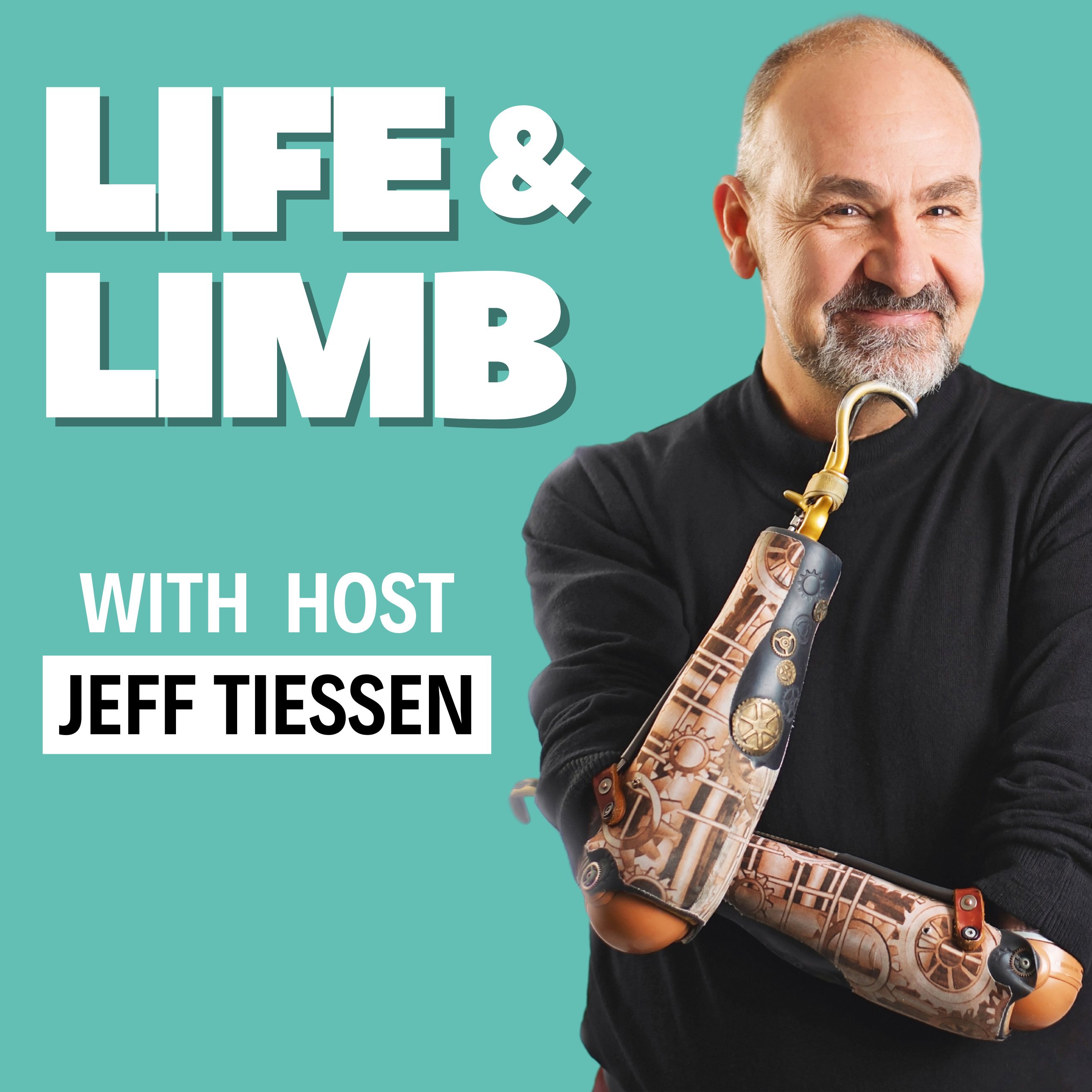
[00:00:03] Speaker B: welcome to Life and Limb, a podcast from Thrive magazine all about living well with limb loss and limb difference. I'm Jeff Thiessen, publisher of Thrive magazine and your podcast host.
My guest this episode is registered nurse and now certified life coach Leslie Kamasnet, who brings with her a story of deep resilience.
After decades as a healthcare executive, Leslie navigated multiple life altering events, surviving cancer three times. One time with a four months to live diagnosis.
She has endured the loss of her husband, a devastating event on her home, which caused over half a million dollars in damage, as well as multiple amputations, the last resulting in her being a baloney amputee.
But she rebuilt physically, emotionally and professionally. And today she, along with her daughter Kristen, as her business partner at Karma Coaching Insights, are helping others move past trauma and adversity. And we'll talk about her soon to be released book two, no Accidents, Finding Order, Meaning and Power in Life's Hardest Interruptions. Leslie, welcome. How are you?
[00:01:21] Speaker A: Welcome. Thank you.
I'm very good, thank you.
[00:01:24] Speaker B: Good to hear you told me previously you haven't done an interview in a while, but you know our chats in the past.
As I said, you're, you're the expert in your own life, so I'm sure it's going to be intriguing what you share with us. Where are you?
[00:01:39] Speaker A: I'm just Outside of Vancouver, B.C.
in New Westminster, actually. Right on the water.
[00:01:45] Speaker B: How nice.
Been a good summer?
[00:01:48] Speaker A: It's been a little smoky, yes.
AC is really experiencing the smoke this year.
[00:01:55] Speaker B: Yeah. Yeah. It's unfortunate, isn't it?
[00:01:57] Speaker A: It really is, yeah.
[00:01:59] Speaker B: All right, well, let's start here. You know, what began as a story of overcoming your own adversity has become a mission to help others rise above theirs. So let's talk about your story and how Karma Coaching Insights came to be.
[00:02:19] Speaker A: Karma Coaching Insights was a way for me to give back.
So many people on my journey have helped me, have turned around and given me a leg up, a helping hand and have encouraged me to go forward.
And that was so important to me. What I saw around me were especially healthcare executives, healthcare leaders that were so burnt out that couldn't move forward.
There were so many people that had obstacles in their lives.
Whether they were working through problems with their children, divorce, or they just felt they were in the wrong place and they didn't know what to do about it. They had come to a level within healthcare that couldn't move past it. So I started it in healthcare coaching.
I took my diploma in life coaching and then I moved on beyond that.
During this period, I had problems with my leg. I had had two trans metatarsal amputations of both feet.
And now the infections had moved up my leg. And so I had my leg removed last year in March.
And when I came out of that, I tended to bounce back because I had been through a lot of things and had built a religious resilience. But I saw others struggling.
So now that's where I'm focusing. What I'm doing is on helping others come out of what they've gone through.
My time in rehab was golden.
I learned so much about myself and how to move my body better and what it means to lose a limb.
But a lot of people couldn't receive that. They couldn't receive the lesson.
They would do the exercise, but they were angry and they couldn't see beyond it. And I guess my message is our lives are not defined by what happens to us, but what we make of what happens.
And I think that that's the, the whole thing that we're doing through karma coaching now.
[00:04:28] Speaker B: Yeah, that's quite a pathway to where you are now. And of course, part of that, as you referred to it, was losing your first kind of partial foot amputations and then more traditional, if you call that below the knee. And I had referred to in your intro about the house damage and a tree fell into your house. Right.
Which was not how you lost your, your leg. But you've told me that the stress from that combined with, you know, an immune system that had been depleted the. The.
Your foot through chemo with, with burns that led to the infection that you referred to in the amputation.
[00:05:13] Speaker A: Yes, I battled infections from the time well before the house, just before the tree came through the house, and then after it got much worse.
So on that night, I was sitting watching TV and I felt very strongly I needed to go to bed. All of a sudden, turned off the tv, laid down in my bed, and within two minutes they, they think it was like a three ton tree, Huge tree came through my house, right through the chair where I was sitting, the window behind me, into my TV set. And then taking out my skylight. It ripped off most of the roof. And then it started raining. And I was completely un unaware, unable to work. But I realized my mother, who is at that time 90 years old, was down the hall and I needed to get her to safety. And that's what motiv me, motivated me to get out of that bed and to go. So I got her downstairs. And then within two hours, the fire Department condemned my house.
So I got my mother to my neighbors, called my son over, and then we started dealing with all the emergency services from the garage because we couldn't use the house anymore.
[00:06:32] Speaker B: And you had previously lost your husband. You. You were a widow at. At the time, right?
[00:06:36] Speaker A: That's correct, yes.
[00:06:37] Speaker B: Yeah.
Wow. There's some perspective that would come out of being in that chair two minutes before the. The tree came down.
[00:06:46] Speaker A: And I think that's what disrupted my life, is because I thought I was safe.
I thought I was secure. I had locks on the door. I had cameras in the yard. I had that sense of safety. Never anticipated a tree coming through the house.
Never anticipated that at all.
So life happens, and what you have to do is you have to take.
Well, like they say, if you get lemons, you make lemonade. You have to take what life gives you, and you have to process it.
What I didn't do very quickly was process it. I had people coming to the apartment. I was then at daily saying, what do we do about this? What do we do about that? You've got some belongings that can be saved. Most of your belongings on the upstairs have to be thrown out.
What do we do with this printer that's been smashed? What do we do with, you know, this TV that's smashed? All these kind of questions, but they were there constantly, constantly over weeks. And I finally went to Calgary, where one of my daughters lives, and stayed with her for seven weeks because I couldn't take the stress. But that stress compounded, compounded, compounded, until I finally released it. But the damage was done. The infection that was small in my foot started traveling and more towards my foot. And it finally, even though I was getting home care and I was getting wound care and I was getting all these things, it finally traveled and hit the bone. So I got osteomyelitis, which is why I lost the leg.
[00:08:18] Speaker B: I see. Okay.
You know, it kind of begs the question.
You were a nurse, registered nurse, you were in leadership, that executive in the healthcare world. So you lived on both sides of the hospital bed, so to speak. And when you know as much as you do as. As a medical professional, is that helpful when you become a patient?
[00:08:43] Speaker A: Actually, in some ways is helpful because you know what to expect. In other ways, it. You see all the things that could happen, you see all the downside that could be out there, and that. That brings a different level of stress to you because, you know, oh, this isn't looking right. This is going to happen. You know, like, you jump ahead and that can be a problem.
When I first saw my amputee amputation on my leg, it was all bandaged up and I went, okay, that's right, I'm missing part of my leg. I can see that. That's right. They took the bandages off and I was not prepared.
I was not prepared for the swelling, for the blood, dried blood, for the stitches, for the staples pulling at it. Nasty looking gash that I didn't expect.
I was looking at it from, okay, my leg will be gone. Never really thought through those details. Even as a professional that has seen lots of wounds. Never really thought about it when it came to me.
So it helps and it doesn't.
[00:09:54] Speaker B: Yeah, I think you said it. There was a calm that you did have based on, you know, it's not the first time you saw staples and blood bandages, but on others. Right. And, and, you know, unlike, unlike a traumatic injury where we often don't see it coming.
[00:10:13] Speaker A: Right.
[00:10:13] Speaker B: You, there was some predictability to this for you, wasn't there? Was it, was that not time enough to prepare?
[00:10:20] Speaker A: It was, but they weren't sure they could do below knee. They thought they might have to go above.
And I was trying to play all the odds, trying to figure out all the things that could happen.
But knowing in your head and seeing it with your heart and your eyes sometimes is very different.
And as prepared as you can be. It's still trauma, no?
[00:10:44] Speaker B: Absolutely, yeah, yeah.
I mean, trauma. You've had your fair share of it and loss in your life, but you've, you've said that losing your leg, I mean, obviously changed your body, but it changed your, your relationship with your identity and independence.
So did limb loss impact you differently than some of those other adversities?
[00:11:07] Speaker A: Yes. I went into a wheelchair and I was in a wheelchair for about nine months.
I'm now walking, but I was in a wheelchair with not having balance, with only having a stump on one side and below knee on the other.
It was at times impossible to stand, especially when the prosthetic was changing all the time and I had to keep moving and changing and putting on more socks and all this sort of stuff. There was a lot of, there was a lot of challenge that was long lasting. It wasn't. The tree went through. Now what do we do? It is now you're going into a wheelchair. Now how can I get to that walker? How can I get to that next step? What can I do next? How can I move this forward?
Different kind of planning, I think, around it.
[00:11:58] Speaker B: Yeah, I can certainly understand that in terms of identity. I mean, we hear about cancer survivors and you wearing three badges in that.
I mean, that impacts your identity, I would believe, but limb loss even differently.
[00:12:18] Speaker A: Yeah, I think when, especially the last time I had cancer at the top of my stomach, I was told there was nothing medical science could do for me. They had tried everything, Nothing was working.
And so my doctor said, we are taking you off all medical support.
I'm going to give you higher painkillers and send you home.
I had to decide within myself. This was six years ago now. I had to decide within myself that I wanted to live.
I had to decide that no matter what, I was getting through this and I was going to live.
And that was a decision I had to make. It had to be an understanding I had, But I had to move myself forward.
With limb loss, you don't have that decision to make. You have to decide to be the best version of yourself you can be.
In spite of what your body's doing.
You have to decide that you're going to move forward.
And it has to be a contained, day by day decision to move yourself forward and to realize this is my new reality. I can't be looking back to what happened in the past, what I was in the past, how I used to jog in the past, or how I used to go to the gym in the past. That's the question. Now what I have to do is what's my new reality? What am I going to do now? How am I going to live this life now? This is who I am now. This isn't looking back at who I was, it's who am I now?
And that changes your identity because you realize you're moving forward and it's on you.
Nobody's here. I don't have a physiotherapist visiting the house telling me what to do. It's on me. I need to decide every day I'm going to get up, I'm going to do this, I'm going to do that. I'm going for a walk, I'm going here, I'm going there.
Those are decisions I have to make. And it's every day you have to decide that. And every day you move forward.
[00:14:25] Speaker B: And something you said, and I think it's really profound and I wonder if it's born out of sort of that line of thinking is when you said our greatest interruptions are often, are often our greatest invitations.
Are we talking about the same thing? What do you, what do you mean by that?
[00:14:44] Speaker A: My life has grown so much and I'LL use the example of my book.
I never would have wrote, written a book before. I was too busy. I was too involved in all my projects and all the things I was doing, and I was too busy building.
So I was working with contractors and I was working with getting new equipment in all those sorts of things. I was too busy.
Once I. I stepped back and, and was at home because of my leg, I had to time to think, what else could I do? I'm not going to be able to go to construction sites and look at things. I'm not going to be able to even go into the office a lot of times, what can I do? Then I thought, you know, I have all these stories and all these things I want to share.
I think this is an opportunity.
So I took it. And it's only been this year that I wrote the book. I wrote it in the month of February, finished it and went to edit at the end of February.
And it's a memoir and then it's teaching at the end and it teaches throughout, but it's a memoir. And I guess that opportunity presented itself and I got more satisfaction out of that than a lot of things I was doing at my day job.
[00:16:04] Speaker B: And sticking with the book and what I've seen is a, maybe a theme or a foundation of your coaching is this concept of fusion where we get stuck on something. And that's not necessarily in trauma, but as you've said, divorce or problems with your kids.
Is that part of the book and explain what that is.
[00:16:29] Speaker A: Okay, so anytime something happens that is an interruption, that is a disruption, it happens in your life.
There's many ways to handle it.
If you act emotionally in the moment, it fuses to you and it becomes part of you.
I am the divorce. I am not worthy. I did something wrong.
Blame, shame, that all comes into you. It's emotion.
If you go through that same divorce and you can hold it and go, things didn't work out, and look at it with just a little perspective, you can go, okay, what can I build from this? What can I move on from this? How can I move past this?
But if it fuses to you, you get into blame, shame, all these emotions and you can't get out of them, it's very difficult to extract yourself from those.
It's the same with a physical problem. If you have cancer, I am a cancer patient.
If you can give yourself a minute, you say, right now, I have cancer.
That's how I got through cancer three times.
Because I could give myself a little distance.
If it fuses to you. You can't do that. You can't. It's very difficult. You can do it eventually, but it's very difficult to actually see what you're going through. You know, it's a. It's a divorce. You know, it's a. It's a diagnosis, but you can't get past that. It becomes part of you.
And that's where your, your identity comes from. Then I am the cancer patient. I am the divorcee.
I have failed, I have done, I have whatever. But it's blame and it's emotional based.
If you give yourself that little distance, then you can observe, which is the O. I have this acronym for what I teach. It's called hope.
So the first one is hold it a little bit further away so you can see what's happening. Then observe what's going on without judgment.
He did this, she did this, is nothing. Just look at it, what the problem is and observe it.
When you can do that, when you can really see what the actual problem was, you will find a whole bunch of pathways. The P open up to you where you can take that so you don't have to react and hold it inside you, but you'll find ways to take it forward, to get by, to get past it, to heal through it, but you'll find pathways open to you. Once you have those pathways, you embody that.
You embody that. Okay, now I am, you know, going to do this. That's exactly who I am. And you start walking that path and you embody that. If you can do that, that's the acronym for hope. If you can do that, then you can heal through it.
Any disruption, any interruption that I've been through, that any of my clients have been through, we've been able to walk that path and get through them. Through the HOPE framework.
[00:19:44] Speaker B: Yeah. So us being emotional creatures, I mean, we're going to default or autopilot to that emotional fusion? Probably.
Would this then be more of a corrective approach rather than a preventative? I mean, do.
[00:20:00] Speaker A: Yeah, it can be both. If you know that you need to give yourself distance and then something happens, you can do it right away.
If not, you fuse and you have to pull it out of you and give yourself that distance and then you heal that. That's my philosophy.
[00:20:20] Speaker B: Yeah.
You know, sticking with that philosophy and skill sets.
Your business is based on what you and your daughter call a shared truth. And that being people don't just need skills and they need support and they don't just need information, but they need guidance and strategy and confidence.
So as amputees, those with limb loss or limb difference, what might this look like for us?
[00:20:52] Speaker A: First of all, you're master of your own life. As you said earlier, you have to actually take that on as a truth and you have to build the skills for what you're going to do now.
When I got discharged from the rehab center, I was dumped in my home.
The people I was supposed to leave the the Saturday and they needed the bed, so they discharged me on Wednesday.
I did not have my ramp built, so I couldn't get in and out of the house.
I didn't have vegetables or groceries at all in my house and I couldn't get to the second floor because there were two steps before my chair left.
So I was stuck on the main floor with no food, no ramp, and I couldn't leave by myself.
And I was having difficulty transferring to the toilet in, in my house.
So I had to make a decision, what am I going to do about this?
My daughter was coming Saturday when I was supposed to be discharged from Calgary, and she couldn't come earlier because she's working.
So I'm like, okay, so what do I do about this? There's nothing I could do about the ramp because they couldn't come and put it in earlier.
So that was out of the question. But I could order groceries.
So I went into an ordering system and was ordering from my local grocery that was for the groceries. They could bring them in. They actually put them on my counter so I could, from the wheelchair, put them in my fridge. Everything worked out really well with that.
I had no clothes, but I had some clothes from hospital that I could wash out in the sink in the kitchen and use until Saturday.
I could make those decisions to set myself up. Now what could have happened was I could have refused to go home, made a big stink at the hospital.
I could have called on neighbors. I could have done a whole lot of things. I'm fairly independent and I positioned myself in a way that I could get what I needed for the days until my daughter came.
So that was how I looked at setting myself up. Now, as an amputee, there's many things I can do and there's many things I'm not able to do. I have to know that going into it, what I can do and what I can't do. But I also push myself a little more every day.
I take a little bit extra time in my walk, I spend a little more time on my exercises. I do a little bit more for Myself every day.
We have to build that into ourselves, and we have to know what our skill set is.
We have to know what we can do to move forward. And I think that's part of it is taking an inventory of what you have when it no longer fits, sending that away and building those skills where you're going to go into your future.
[00:23:57] Speaker B: And is that the strategy part? And then from there comes the confidence with small victories?
[00:24:03] Speaker A: Yeah, you bet.
[00:24:05] Speaker B: Yeah.
Common question I like to ask most of our guests here on the podcast revolves around resilience. And you've referred to it already, and it means different things to different people. So the question simply is, really, what does resilience mean to you in the sort of the broader picture of your life story? And today,
[00:24:33] Speaker A: I believe that resilience is when you can take what happened to you, you can look at it and you can move past it, and you can still have the life you want. Your life is going to be different. When something happens, there's change, but you can move to the next path or around the path that you were on.
I might have wanted to run a marathon.
That's not going to happen for me, but maybe I can do something else instead. I think that's resilience. It's finding a way to do something else that meets the need that you had before, maybe in a different way, but it's looking at things through new eyes. And there's also the thing of, well, maybe I can. Maybe I can't keep walking until I can run, until I can do that marathon. But I think it's also being happy to move around things and to be happy with your life the way you are.
[00:25:32] Speaker B: There's an inclination of most people to say, I'm fine, when sometimes we're not. And I know your coaching revolves around that, too, that living honestly, is that part of the resilience for, you know, to. To be accountable or honest in. In where we are, in our. In our health, physical mental independence.
[00:25:54] Speaker A: It's. It's key because you have to ask for help when you need help.
And I know that as much as anybody, you can't just do it yourself.
And I have a team of people I rely on.
It's like my business. My business is coaching. But my daughter does all the social media stuff for me. I. I write it, but she does all the posting and all the other stuff. And she's a project manager, so she teaches project management through our company. But you have to work with people. I worked with a physiotherapist I work with my doctors, I work with my processes.
[00:26:32] Speaker B: Still hard to say.
[00:26:35] Speaker A: I, but I work and I. And I try and work with people and I know when to say, hey, I need help.
You want to push yourself, you want to do what you can. But there's also that moment when you have to work with the community you build around yourself.
And I also believe that especially when you face something like an amputation, you have to make sure you have people around you for emotional support too, not just physical support. I think that's key.
[00:27:04] Speaker B: Yeah, it sure is.
The in Thrive magazine, we try and address that more and more all the time as we become more aware of how important that is. Absolutely.
You know. And then back to your book. It's at the publisher now, right?
[00:27:21] Speaker A: It is, it is releasing when they're looking at end of the year, but there's a couple edits that have to change some things yet. So it will be probably year end into first part of next year, so a few months off yet.
[00:27:36] Speaker B: Yeah. Well, that's exciting.
[00:27:40] Speaker A: Now it's the.
[00:27:40] Speaker B: Wait for it. Yeah, yeah.
So it's primary title no Accidents. But you also have the no Accidents notebook and that's accessible to people now, right? What, what is that?
[00:27:53] Speaker A: That's on substack and I take excerpts from my book or ideas from my book and I discuss them and it is kind of random a couple times a week, but I try to put my thoughts out there to discuss for anybody, not just people with limb loss, but for anybody that's, that's facing a disruption, what they can do, where they can look, how they can get through it.
[00:28:19] Speaker B: Gotcha. And is that different than your Reflection guide, which I see is a free download on your website?
[00:28:28] Speaker A: Those are seven questions you can ask yourself. And then there's space for writing to think about the disruption you're going through, the interruption that you're going through to reframe it. And that sort of takes you through a path to sort of give you some ideas on where you can go next.
[00:28:47] Speaker B: And you through your services and company would always be available to help somebody. There are topics that need some professional guidance. Right.
[00:28:56] Speaker A: And we do an hour free interview with people to talk about, know what they want to talk about. And then if they decide to go into a coaching contract, then that's after. But we do a free interview with people.
[00:29:08] Speaker B: It's terrific. How's the business going?
[00:29:10] Speaker A: Pretty good, pretty good. I mean it's up and down because I'm not always available, but. Yeah.
[00:29:16] Speaker B: Yeah.
Well, this has been so insightful to borrow a word from your, your, your your coaching, your coaching company. Yeah, thanks for this. It's really a different perspective you know, going back to the perspective from both sides of the bed being a medical professional and now you taking what you've learned and reshaping it for others to to benefit from too. So thanks so much Leslie.
[00:29:42] Speaker A: Thanks Jeff.
[00:29:43] Speaker B: You're welcome. So for more information on Leslie, her company karma coaching insights.com that's karma with a karma karma coaching insights.com and there you can get that free reflection guide.
There are some other free resources there and then a subscription program if you want to dig, dig deeper.
So with that this has been life and limb. Thanks everyone for listening and you can read about others who are thriving with limb loss or limb difference and plenty
[email protected] and you'll find our previous podcast episodes there too.
Until next time, live well.