Episode Transcript
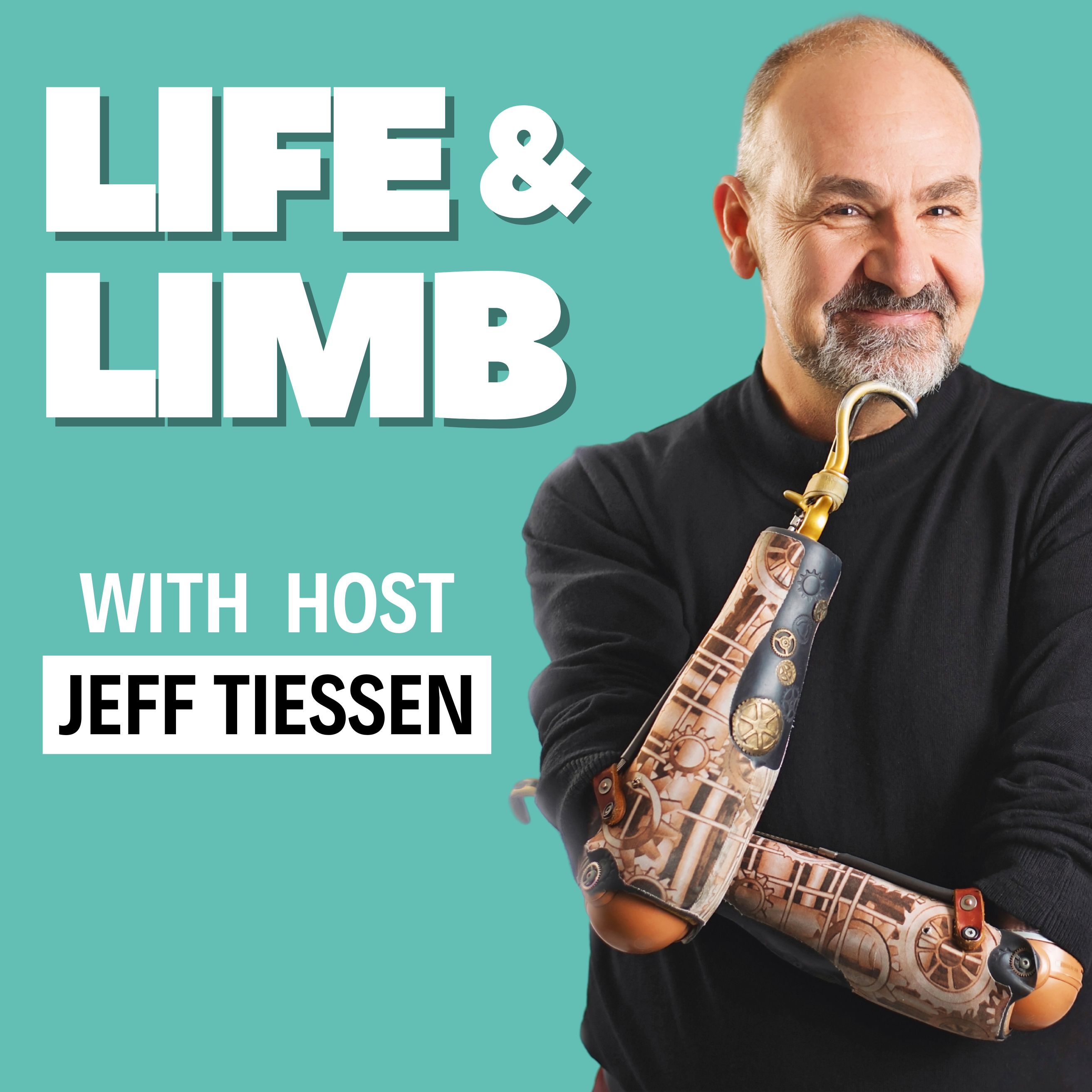
[00:00:03] Speaker A: Welcome to Life and Limb, a podcast from Thrive magazine all about living well with limb loss and limb difference. I'm Jeff Thiessen, publisher of Thrive magazine and your podcast host.
My guest this episode is British Columbia's Andrea Swallow.
Growing up in Victoria, possibilities in life were boundless for Andrea. Her teenage years were good. Lots of social and athletic and academic endeavors. And then she became an amputee at 16. I think I have that right.
A survivor of a motorcycle accident.
And in a Thrive Thrive magazine feature a few years ago, Andrea shared what she would say to her younger self with what she knows now about acceptance, joy, self care, emotional health, and the impact of trauma.
She's mom to three sons, ages 17, 21, and 30, and she's the National Peer Visitor Coordinator for the Amputee Coalition of Canada.
An amputee and now an amputee of almost 38 years, she ponders her future self and looks back to that advice that she had for her younger self in hopes that it. It works for her as she adapts to life's next stages as they come. Andrea, welcome. How are you?
[00:01:24] Speaker B: Hey, Jeff. I am really, I'm really happy to be here. Really nice to see you.
[00:01:28] Speaker A: Thank you very much. Thanks for being here.
Let's start with this. For those of us who have lost limbs, and that could be through trauma or cancer or electively in some cases, we all now live with that other important day, and we all approach it with what some call their ampu versary. We all approach it differently. And very personally, I just celebrated 149 years as an AMPU, closing in on 50.
And, you know, each February 6th, my day, I, I get a bunch of funny power outage memes from my friends and.
And family who know how I approach the day. And I had an electrical injury when I was a little kid. I was 11.
That's how I approach it, with humor, positive reflection.
For my mom, though, she struggles with the way I recognize the day. And let's talk about your day, which I know is coming up.
How do you approach it, and how did your parents approach it all these years?
[00:02:36] Speaker B: Yeah, it's a good question because it definitely impacts them, doesn't it? Then, especially for us being at a younger age, they were the ones that carried so much of the weight and the responsibility of our physical care and what was going to happen in recovery and all that. So, so. And what life was gonna. And trying to envision what life was gonna look like for their kids. Right? So first of all, 50 years, I can't. I can't wait for you to have this 50 year. Like, it's that the party, it's phenomenal. It really, it really is. So kudos to you. You are a true survivor. And yeah, I, I'm quite, I'm quite stunned sometimes when I think about coming up to 30, 38 years.
I know that first, that first. Those first years were really kind of tough. So as you had mentioned, I was 16 and I didn't, I don't think I did much to mark them in, those in, in those first couple years.
But once I became of legal age, my dad really wanted to celebrate with me and you know, he thought, he thought that this was something to really acknowledge and go celebrate, go have a beer together and let's Cheers. Cheers. This life thing and, and having gotten through, you know, some of these, some of these hard pieces, he had had a quite a major accident two years before mine and it just, ours just kind of coincided by a couple days. Two years and a couple days. So, so he was in his mindset. This was, this was really something to acknowledge, you know, that we'd both come through this and we were both doing well.
So my mom, however it was, it took her, she was, she was very hurt, very hurt that we would consider going out to celebrate, I guess, because she was the one that actually carried that load. And those weren't, those were really traumatic times for her. So when I had my accident, my dad was actually away working in Hawaii offshore, and he worked for the government. He was a submersible pilot, worked for the government.
And so he was often gone for long periods of time. And this was one of those times. So for, for them to contact him, they had to get, contact him offshore, get him back onto shore, fly him home from Hawaii. And, and so mom really was carrying the weight of looking after two younger kids as well as like back and forth the hospital and making decisions. She was the one that had to make the decision whether they were going to keep my leg or, or, or they were going to remove it. So, and so for her, those, you know, those first five years were just like, she couldn't envision what life was going to even look like. She was very, very protective and so similar to probably what your mom was feeling.
[00:05:36] Speaker A: Yeah, yeah, yeah, yeah.
[00:05:38] Speaker B: A lot of, a lot of pain, right? A lot of pain associated to, to that time.
[00:05:44] Speaker A: Absolutely. Yeah. Especially that she was frontline when it happened, waiting for your dad to get back. So.
[00:05:50] Speaker B: Yeah, yeah, yeah. So I, but I, over years, it's, it's funny, I felt like the 5, the 10 year mark was quite significant and I know that I acknowledged it. I don't, I think I acknowledged it by myself, though there was some years that it, the anniversary would kind of creep up on me and I could feel it in my body. I could feel it in my body, although I wasn't paying attention. I don't, I don't look at the calendar every year and go like, wow, July 16th. Okay, it's coming up. What are you gonna do? I just, you know, I just live my life and you get into that pattern and when you've got kids, you're doing other things and stuff. So I, I didn't, I didn't purposely conscientiously mark it every year, but I could feel it building some years and, and, and you know, it would pass by and a couple days after I'd feel this, I feel this really strange sense of relief. And you know, I'd happen to glance at the calendar and I'm like, oh, okay, that'll make sense now. Because I do think you carry trauma in your body.
But there has, so there has been years when I've actually, I've planned for it, I've planned for it. You know, I've created a day that I, that sits really well in my soul. And I'll take myself out on the bike or, you know, I'll go down to the beach and I'll spend some time reflecting and writing or something. So it varies. It varies, yeah.
Yeah.
[00:07:18] Speaker A: So the pint in the pub tradition, well, it never really became a tradition, huh?
[00:07:23] Speaker B: It was good for a couple years.
It was good for a couple years. Yeah. But then anytime was good to have a beer with dad in his mind.
[00:07:33] Speaker A: Transformative years, probably. So.
[00:07:36] Speaker B: Yeah, yeah.
[00:07:38] Speaker A: A friend of mine here in the Niagara region talks a lot about the difference between aging with a disability and aging into disability. So we as amputees are certainly aging with a disability, but at the same time we can also be aging into others, other disabilities as well. You know, particularly as we've talked about, with the extra wear and tear and energy draw we put on our bodies every day, really. So how are you managing the, both the emotional and the physical sort of energy balance of, of aging into new stages of life?
[00:08:15] Speaker B: Exactly. It is, it feels like a new stage of life. And, and honestly, I have these moments of kind of panic about it and, and, and fear. And I try very hard not to, not to, not to lead my life with fear because I just, I, I, I, I, I don't think it's conducive to overall well being. And I, I, and I think and, and fear's a risk, you know, like it's a, it's a reaction. So I try not to stress about it, although I do so. And to me it feels, it feels kind of frightening because mobility to me is tied to my mental health.
So you know, the things that I can do daily and what I, what I manage to do, that helps me stay balanced in a lot of ways.
So the idea of kind of losing aspects of that mobility over, you know, in time, they kind of, it kind of frightens me. So when I was, when I was 48, I ended up getting diagnosed with cancer. And it took, it took me down a notch and not only physically, but mentally, emotionally, and it took a lot of energy to kind of recover from that. And it changed how, it changed my energy level a lot.
So I feel like I've kind of had this little glimmer into what, into what aging is, is going to look like.
And on one hand, Jeff, I have to say that it was almost like this, it was, it was forced, forced time to slow down.
And I had never really done that in my life before and been very, very conscientious of, hey, you need to slow down because you only have so much energy.
I just kept pushing and pushing and pushing and pushing myself. It's like that high achieving, just doing. It's, it's, you know, I think it's, I think it also goes back to response from like trauma in your early years. You just, you just go, go, go, go. And that serves really well for some things, but, but not long term. And so having, having cancer actually I couldn't really do much for a certain time. And, and it made me really press pause and kind of evaluate, okay, what is my, what is most important right here, right, right here, right now.
And, and so obviously it's the physical first, you know, what needs attention first. And then the next part was, okay, do I have the mental and emotional bandwidth to kind of, kind of deal with this? And how am I going to look after those pieces of self too, that mental and emotional piece? So going back to your question about aging, I feel, I feel like this actually is serve quite well because I, it is like that. Let's slow down a little bit. Let's slow down. Let's understand that the capacity that you have is changing.
And that doesn't mean that it's a bad thing, but it means you're going to have to adapt your expectations to how you think you're going to handle it, you know, and so I'm learning, I'm learning, Jeff. And I feel like it's going to be, it's, you know, that aging and aging and disability are going to be this evolution in themselves. And, and I just, I think, I think having a little extra kind of compassion for self and patience for self is going to help.
So I might go down with like a good fight.
[00:12:18] Speaker A: Yeah.
And a cloud of dust.
I'm sure you know what you're talking about. Sounds a lot like what you shared with us when you were giving advice to your, to your younger self and that was all about for new amputees. You know, you had sort of been there, done that, but there's lots where we haven't been and what we haven't seen and, and done yet that like you said, can, can be fearful. But is some of that advice that you would give to your younger self when you reflect on it, you know, things like how to respond to adversity and you talked about grace and just talked about compassion for yourself. Is it some of the same stuff?
[00:12:59] Speaker B: It is, it is some of the same stuff. I think, I think it's almost more refined though.
And you know, these are some of those things that I had mentioned. Those are, those are aspects of how I actually choose to live my life too, because they, partially because they are me, but partially because they have served me well in doing this for 37 years.
[00:13:23] Speaker A: So.
[00:13:23] Speaker B: But I do, I do think some of those are a little bit more refined now.
You know, one of things is with being more, is being more accepting of receiving help from others. And that's been a really, a very, very tricky one for me. I've, I've been very, I'm, I'm trauma I think has really contributed to hyper independence for me and I do love a challenge. So those two things combines. I'm an Aries and sometimes all those things combine, you know, make me a little, you know, a little headstrong I guess. And just like I can do this, I can rise to this, but that doesn't always serve you well. And so I think a portion of that is, is, is really just being more accepting of, of help when it's offered and also learning to ask for it without feeling that it is, that it is a weakness. And I actually had a very dear friend, very dear friend call me out on this probably about six or seven years ago and I was start kind of a deeper dive into just like, huh, you've got some stuff like you've got Some stuff, lady, how are you going to deal with it? And where, you know, like, where do you want to see yourself go in, you know, with the, with the years you've got ahead? So.
But, you know, she said to me about six or seven years ago and something that I fully understood when she said it was, you know, when you deny, when you deny my help, you not only deny me the opportunity to care for you, but you deny yourself the opportunity to be loved.
It was powerful, Jeff. And it. And it. And hearing that really hurt. Like, it really hurt, but in a good way. Right? Like, it was, it was just that wake up. It's just like, oh my gosh. Yeah. Like, as a helper myself and as somebody that loves supporting people, I. I'm like, oh, wow. You can't, you can't have both things your way. Like, you have to let people into your world. Right. And you have to make yourself vulnerable in that.
In that sense as well.
So.
[00:15:44] Speaker A: Yeah, I think right. In the same vein here, you talked about the importance of acceptance, you know, being that younger self, peace. And I think there would be the same moving forward as we age. Right. Acceptance of help, as you say, of ourselves, of our limitations. Do you think about that at all?
[00:16:08] Speaker B: Oh my gosh. Every day, 2am in the morning. Every morning, like every morning. Yeah. I think about acceptance a lot. And you know, I.
There's such a. In the mental wellness realm out there online and stuff. There's such a push about this acceptance. Acceptance, acceptance and, and finding peace within yourself and stuff. But I think acceptance is meeting yourself at different stages in your life with different moments in your life. And I don't think acceptance has to be this big, bold thing. I think acceptance can be all the little small pieces that creep into your world and you actually just saying yes to yourself.
So, yeah, I do think about acceptance a little bit.
[00:16:53] Speaker A: Yeah. And I guess that falls along with, you know, having grace and compassion for. For yourself to the imperfection of ourselves. Right?
[00:17:02] Speaker B: Yeah. And you know, like, not easy to do. It's. It's. It's not. But then, yeah, you just, you do. You do your best with what you can.
[00:17:12] Speaker A: A lot of times you're a type A, right?
[00:17:16] Speaker B: I would. I think that's fair.
[00:17:19] Speaker A: It's not. I'm not judging and I'm not accusing. I'm just, you know, observing.
[00:17:24] Speaker B: Yeah, yeah, yeah. I'm the oldest child, you know, I know the version.
[00:17:33] Speaker A: You love to laugh. You're very joyful person, but I know you're very introspective. As well. And, you know, you probably go down some. Some darker rabbit holes at times. But what brings you joy? Simple question. What makes you joyful?
[00:17:47] Speaker B: Oh, yeah, you know, there's so many. There's so many little things, honestly. Like, I can. I can look outside and I can see, like, you know, the bee landing on a little.
Little bud or something. I'm like, oh, hey, bee. So, you know, I could be biking down the country roads and, like, a little rabbit will, you know, skip along beside me, and I'm like, hey, bud.
So I know that sounds ridiculous, but really, it's this. It is. It is the various simplest things. I. I love being outside.
I love nature. I love. I love sitting in a room with my three boys and listening to the banter in front of me. I don't even have to be a part of it. You know, I just. I just love kind of watching and listening.
I love. I love building connections with people. And, you know, I love. I. I treasure relationships, and I. I love a thrill of adventure. I love travel, and I love putting myself in new situations where I'm. Where I'm forced to be really fully present and think on my feet, too. So.
I love a good book. You know, like, these are all. But, yeah. Yeah. I love the smell of the ocean and the smell of fresh, you know, freshly cut grass. Like, you know, they're all little things, but. Yeah.
[00:19:09] Speaker A: What a gift. What a gift.
[00:19:11] Speaker B: I feel. I feel like it was one of the gifts from. From my accident, you know?
[00:19:17] Speaker A: Yeah.
[00:19:17] Speaker B: Yeah. It pairs everything back and.
And you find. You find an appreciation for sometimes the.
Sometimes the things that are just right in front of you and they have been there the whole time.
[00:19:30] Speaker A: Yeah.
[00:19:31] Speaker B: Yeah.
[00:19:33] Speaker A: What a great answer. I'm glad I asked that.
I know you love to explore, too, and you just mentioned how you love nature, and I'm sure there's lots of that around where you live in Victoria. And I know you love time on your bike, neighborhood streets, or trails, but. But I know you like to explore online and with peers, too, about yourself, about your emotional health.
And you recently mentioned to me that you're exploring or learning a lot more about ptsd. Post Traumatic stress disorder.
Is it something that you're resonating with, that it's particularly impacting? You tell us what you're learning.
[00:20:13] Speaker B: Yeah. Good. Yeah, thanks for asking that. That's. Yeah, thanks for asking. It has been a bit of a deeper dive into it, and I. I think it started with kind of the ptsd.
Learning more about that. And. And does PTSD apply to me and what I am, you know, what I do feel periodically, and the turmoil and the pain that I feel periodically related to adversity and trauma.
But I think what I, What I've come to understand over the last five years, Jeff, is my PTSD is actually the complex ptsd. So what that means is, is that it's more. It's more kind of a longer term, almost like chronic, like little things over time and kind of typically it goes back to childhood. Like it's prolonged, complex. It's not a single event like ptsd.
And the more I've learned about complex ptsd, the more it validates so much of my. My experience and, and the pain that I have carried over over the years and not under, the pain that I haven't understood and learning more about it has lifted a veil on that darkness in a. In a really, again, in a really validating way. I, I grew up in a very volatile.
It was my home and it was my family, and they loved me, but I grew up with an alcoholic parent. And so it was very chaotic and could be volatile at times.
And then when you add trauma and limb loss and grief and loss and disability.
[00:22:13] Speaker A: Cancer.
[00:22:14] Speaker B: Cancer later. Yeah.
You know, throne of divorce and, you know, family breakdown of your own, and it's. It's really impossible to come out of it unscathed on some level. And, And I spent years trying to figure out, trying to understand that unpredictable, that pain and that chaos inside of me with the hopes of turning it into something safer and more consistent and stable and. Which is a really, I think, a really natural response to trauma.
So PTSD never really fit my experience, but complex PTSD 100%.
And I began to see.
I began to connect the dots and see the patterns, and I began to understand how surviving, because I am a survivor right from childhood, how surviving has colored the lens in which I see the world and the relationships that I have and, and the way I communicate within this world and, And I had built up a toolbox of kind of skills and, you know, unknowingly, before even learning about complex PTSD to cope with this.
I'm really good at surviving.
I think you and I have talked about that before. You know, like, you just. I feel like I've lived a couple of my lives already and, And I know I can survive, but it's the, it's the living and the thriving piece that I've always kind of. That I've always craved and I've, you know, I felt like I kind of missed because I was so busy surviving.
So it takes an extraordinary amount of physical energy to put out as an amputee. But when you add those other complexities to it, it takes an incredible amount of mental and emotional energy as well. And some days it's pretty extraordinary to try and manage those pieces. So I work very hard at trying to keeping my system, my nervous system balanced as much as I can. And that's a little bit of physical exercise or activity that's, you know, touching, touching the tree bark as I'm walking past the tree and, you know, like reaching out to my boys and having a five minute FaceTime or something like that. But it's, it's these pieces that keep me kind of grounded and those are the pieces that make me feel like me and, and that feed that part instead of feeling like a survivor all the time.
[00:25:00] Speaker A: Right? Yeah.
I'm very uninformed about ptsd.
I mean, I know enough from friends who have experienced traumatic injuries, friends who've been in the military, but it's so different for, for everybody. It's really, you just can't put a bow on it. So maybe a really naive question, but does it live kind of at a slow burn for you or. You talked about coming from a volatile family. Were there triggers that just sort of sent you out of your typical character?
What did it look like for you? What does it look like for you?
[00:25:39] Speaker B: Yeah, yeah, those struggles look like. So for me it looks like anxiety.
For me, it looks like a feeling, feeling really nervous. For me it looks like insomnia. For me it looks like, you know, that fight or flight. I'm not a fighter. I'm not a fighter at all.
But I will, I will kind of remove myself if I've just, if I've been overstimulated, you know, from a sit in a situation, it can look like, it can look like lows. It can, it can be removing myself and, and not calling in a sick day, but, but calling in a mental health day and be like, wow, I just need to shut everything down today and I need to just, just be okay that you're, you're finding this reset and you're just gonna turn off all the devices and you're just go, you're just going to get yourself some food, maybe have a bath, and then you're not, you know, like, you're just going to lay low today. So.
And other times it means, like, it means, it means maybe, maybe flee. So in the sense of flee, I will, I'll be like, oh my God, I need to get out. I need to get out. I need to walk or I need to get on my bike and go. And, And I'll just, you know, and I'll push myself physically.
So it's, It's. It's a lot of different pieces, and sometimes. Sometimes I don't know when I'm in it. And.
And as I said, like, I'm. I'm still learning what that looks like and how to. How to work with it. And. And I don't. And. And it. Another part of that is actually creating, like, relationships and feeding relationships that really make me feel safe and, you know, where I'm not having to second guess people and, and people that I feel like I can, you know, I. I can. I can spill. Spill what I've got in here. And I know that you're not going anywhere. Right. Like, I know that that's. That's a safe place for me to do that, so.
[00:27:41] Speaker A: Right.
[00:27:42] Speaker B: Yeah. Yeah. But it really.
It really all makes sense to me the more I learn. And.
And I think that just kind of. It's really painful to do some of these deeper dives into self, but I. I want. I want to look after myself the best. The best I can. I don't think the physical piece is just it. I really strongly believe that the mental and emotional is almost a more important piece of it.
So I'm. I'm always kind of advocating for that for. For myself and for others.
[00:28:20] Speaker A: Thank you for sharing that.
[00:28:21] Speaker B: Yeah.
[00:28:22] Speaker A: I'm really grateful that you did. And I don't know if you're expecting that we'd be talking about this.
No, but it's.
[00:28:31] Speaker B: It's really. It's really. It's really easy to share and, you know, like, you can't live with it inside your head because I just. I don't think that's healthy either, so. And again, it's the space that you create, Jeff. So appreciate that. Yeah.
[00:28:45] Speaker A: Appreciate it. Let's go back to the gifts.
We touched on that a little, a little bit earlier, and you've talked at times about the irony of your amputation and that it forced you out of a comfort zone. And I think our listeners can probably understand what you mean by that and what you've shared already, but it built confidence in you. At the same time, there was adversity that contributed to struggles with anxiety and depression. Have you. As you've said. But you have said there were gifts that came with limb loss for you and love for life, which obviously we can hear. What else? What other gifts?
[00:29:28] Speaker B: Yeah. So. Okay. So the first one, obviously, because I wouldn't be in the role of, you know, volunteering with ACC if I didn't really believe in it. But it's the community 100%.
The, the individuals that I've met over the last eight years being quite deeply entrenched in the amputee community in Canada has brought so much unexpected joy to my life and, and through that healing and, and I think that was kind of the surprising piece, right? Like, you know, when you're, when you're a giving your helper, you just that. And I think that really is an innate piece in me, you know, prior to all this, but I don't think I quite understood the reciprocal nature of, of, of how much it would contribute to my life.
I'm, I'm a better person for the interactions and the support and the wisdom and love that our community has shared with me and their capacity to hold both fear and hope in the same pocket and do. Do so unapologetically and to show up for one another is, Is really what inspires me. Like, I just.
Yeah, I, I don't know. That's a gift for sure.
I think another one is.
And actually this, this one I, I hold very closely is, is transparency and how, how.
How of how you live your life and the honest, the honesty that you do it with. Because so much of this life and being navigated by the healthcare system for so many years requires stripping back to, you know, stripping back of the surface stuff. And it can leave you feeling pretty raw, pretty vulnerable, pretty raw.
And that has kind of become a state of how I live my life is. Okay, it's, it's pretty, it's pretty clear how I, how I live and who I am, I hope.
And it's, it's kind of what I really love about having these conversations with other people is that when you strip all that surfacey stuff back, there's, there's such capacity for depth and, and the pieces that really kind of connect us in and, and bridges and build, Build good things. So, yeah, Yeah, I don't, there's, there's no BS when you're, when you just live like so transparently, right, because you, because you have to. But then you realize, oh man, there's. There's pros to this. There's pros to this. I don't, I don't really have anything to, to hide. Right. And why, why would I. And I don't want to sugarcoat things anymore either. It's just I grew up in an English household where where you did a lot of that stuff and it really didn't, it really didn't serve me well for many years, so.
Yeah, so it has definitely been a gift that way too.
[00:32:45] Speaker A: Yeah. I can. And so many more, I'm sure. And, you know, as I listen, you know, if those gifts are the bricks, it would seem that the mortar is, is empathy. I, I, Yes, I think you, yeah.
Experience or share or are very empathetic based on what you've told me about your life.
[00:33:06] Speaker B: Yeah. Thanks, Jeff. Yeah, thanks. Yeah. Yeah. Compassion plays a big, big role in it. Right. And it's, I think when you've experienced what we've experienced.
I, I don't.
I, I would wager you feel the same way. I, I feel this, this, this responsibility to others, you know, and, and I know that we all have the capability to make this place a little bit gentler and a little bit kinder and, and I've always wanted to be part of that equation and add to the solution rather than be one of those people know, takes and takes and.
Yeah, I, Yeah.
[00:33:50] Speaker A: Well, what a lovely, lovely segue you've provided me to, to the last question I wanted to, to ask you, and it's, it's about that you're, you're helping. You referred to acc, so that's the Amputee Coalition of, of Canada, and you lead the Peer Visitor, the National coordination.
I'm sure you've heard from your peer visitors or those that have benefited from, from peer support some remarkable stories in how.
I'm sure it's quite symbiotic. It goes both ways or reciprocal. Right. For visitor and those receiving the support. So just talk a little bit about that, your role with the organization, the importance of peer support through your program.
[00:34:32] Speaker B: Yeah. Yeah.
It's an honor to be doing this work.
You know, it's been eight years that, that I've been involved with ACC's revitalization and what we've witnessed in that time, I mean, we've definitely seen, we've definitely seen mental health become more, more prominent, more on the forefront of those conversations that we have, you know, around depression, anxiety and, and such.
And, and what's interesting is during the pandemic, you know, there's so much talk about isolation and loneliness and stuff, and I don't think any of us were, any of us amputees were really strangers to those, those feelings that experience.
And I think that's thing that, I think that is something that, that so many of us feel in some capacity over the years of dealing with Limb loss.
So, in a sense, the pandemic actually kind of brought a lot of that to the forefront. And mental health. And how do we contribute more to mental health?
I think what. What we do is.
I wish. I wish it was more on some capacity. You know, there's.
We all contribute. We're all volunteers. We all have jobs outside of this.
But when you are there in a space and you get to witness what is unfolding in front of you in a room, when you've brought together amputees and you see how they interact, you see how they come in in the morning, and there's always. There's always a couple that are. That are hesitant and, you know, are shy or reserved or. Or have a little bit of armor around them.
And by the end of this. By the end of the full day session, Jeff, it's.
You're seeing people sit up taller, you're seeing them be engaged. You're seeing them.
You're seeing this lightness, a little bit more lightness. And. And it's in the way that they hold themselves and the way that they interact. And.
And I think what it is is that they're finding a place where they. Part of them really belongs.
And when you stand back and you're kind of watching this, you realize there's this beautiful kind of organic nature to it. I mean, honestly, you can stand back. And some of these people haven't been able to have conversations or met another amputee before.
And, I mean, that is a privilege to be a part of, for sure.
And then when we have these really direct conversations about some of the heavier things that this. This life entails and how to support others in it, I think it really does open up a lot for people. So there's no doubt that there's healing that happens in that room.
And. And it really is an honor to be a part of it. So this is the. This is the community that I, you know, and one of those gifts that I, I.
That I belong. That I. That I know and I belong to, and I'm so damn proud of. Like, I just.
Yeah. And I learned something from it all the time. I mean, they're coming up to 38 years of this life, and I still feel like I'm learning all the time.
[00:38:18] Speaker A: Yeah, it's a journey like we talked about. Right. And I'm sure you're providing, like, an exceptional, safe space for. For that group once, you know, they can take the armor off. And I've often, you know, referred to it as the brotherhood and the sisterhood there's just something about meeting another amputee where we don't typically have to ask each other what happened to you enough. Right. We don't need that from each other. But it's more how you do it. And.
[00:38:44] Speaker B: Yeah, yeah, I just, I just love that it really is pared back and it's, it's just like, hey, what's your name? Like, I know you, I know you've got a story, but, you know, like, it's just, we do have, we do have those pieces in common, even though there's so many other pieces, so many other variables that come into that, into that, you know, what brought us to that place.
So, yeah, I, I don't know. I'm really, I'm really proud of it. And, and I care very, very greatly for it. And it, it's very important to me that we do create that space where people feel that they're being seen and they're being heard and that they feel safe to be actually just they could share their truths about, about this. Right, that's. That's some good medicine right there. And, and I also think it just, it helps create.
It helps minimize the stigma and the shame about some of the normal human responses to trauma or hardship or struggles that, that all of us face, whether we're amputees or not, because we all do. But I think that space is a real.
It's a really special, special point for, for that kind of stuff to occur.
[00:40:02] Speaker A: Yeah, I agree. For connection.
[00:40:04] Speaker B: Yeah.
[00:40:05] Speaker A: Others that are quite similar to us.
And that's what I wanted to wrap up by saying, and maybe I'll let you do the, the shout out to anyone that is interested in becoming a peer visitor or would like some, some peer support. So give us the URL, the website for the Amputee Coalition of Canada and anything you'd like to kind of wrap up with as a calling card.
[00:40:28] Speaker B: Yeah, yeah. So if, you know, if you are interested in receiving peer support, you can submit a request onto our. Onto our website, Amputee Coalition Canada. Amputee Coalition Canada.org you'll see the request form there. If you want to become a peer visitor, there's a form on that same site there, as well as numerous resources across Canada. So we are always looking at supporting our community, providing training and encouraging others to get involved with the Coalition of Canada. So if volunteering is something that you think is your wheelhouse and you want to join a very resilient and passionate group, then please come on in, give us a, Give us a call. Give. Well, not a call. We don't have a number. Give us a shout out on the website and yeah, we are, we are happy to engage with the community and, and build what, you know, what's being asked for out there.
[00:41:35] Speaker A: So that's what you do. That's, that's terrific. So again, Amputee Coalition Canada. There's no of in there. Amputee Coalition canada.org what a delight. What a joy.
[00:41:49] Speaker B: You too.
[00:41:51] Speaker A: Thanks so much for, for joining us, Andrea and Sharon and being vulnerable and honest as you are and, and congratulations on the great work. I know you're helping a lot of people.
[00:42:02] Speaker B: Thanks. Thanks for sharing the voices too and supporting those that do. It is takes a village. We're doing it.
[00:42:10] Speaker A: You got it. Sure does.
[00:42:12] Speaker B: Yeah.
[00:42:14] Speaker A: Thanks again. So folks with that this has been life and limb. Thank you for listening and you can read about others who are thriving with limb loss or limb difference and plenty more at Thrive Mag Ca and you'll find our previous podcast episodes there too. Until next time Live. Well.