[00:00:00] Speaker A: Foreign.
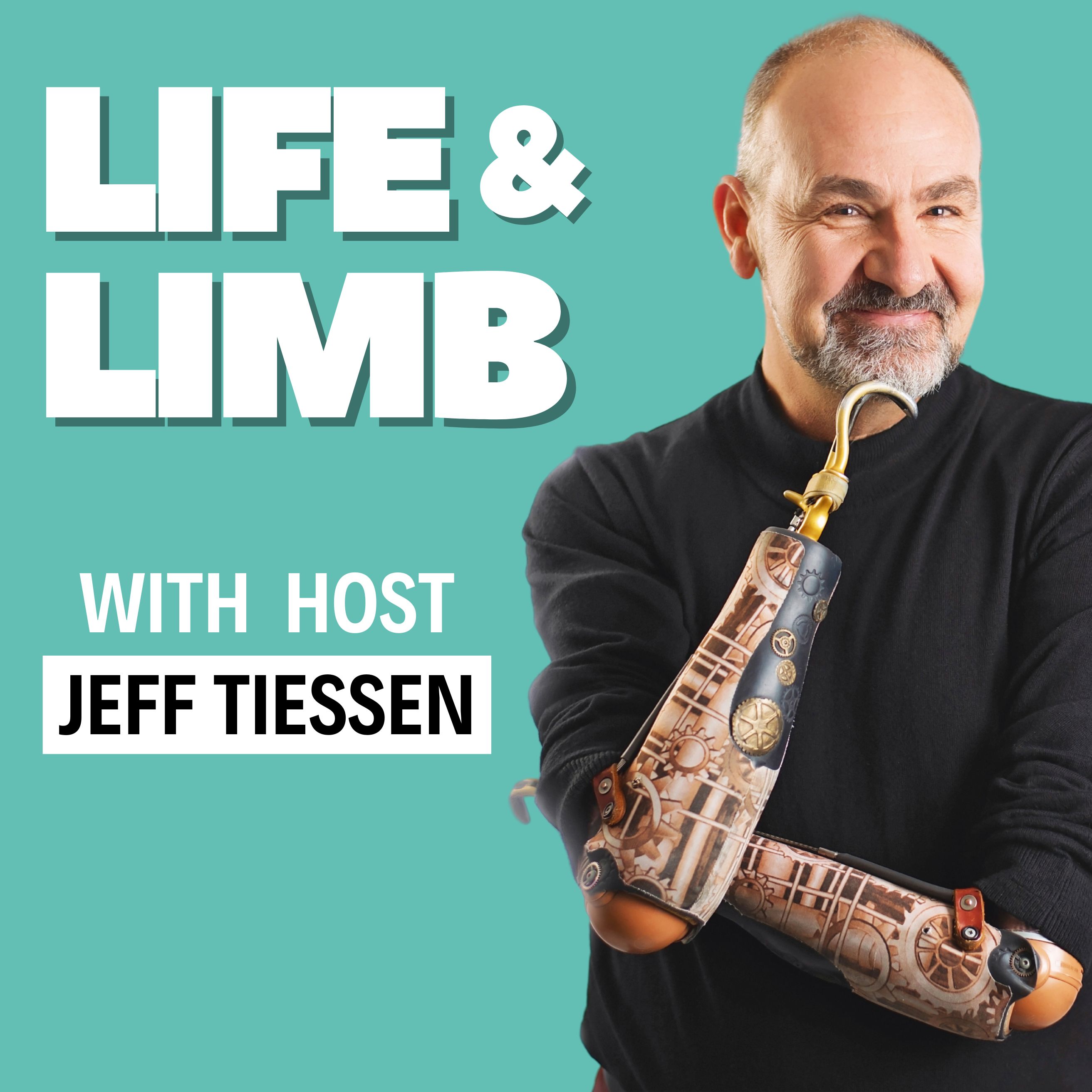
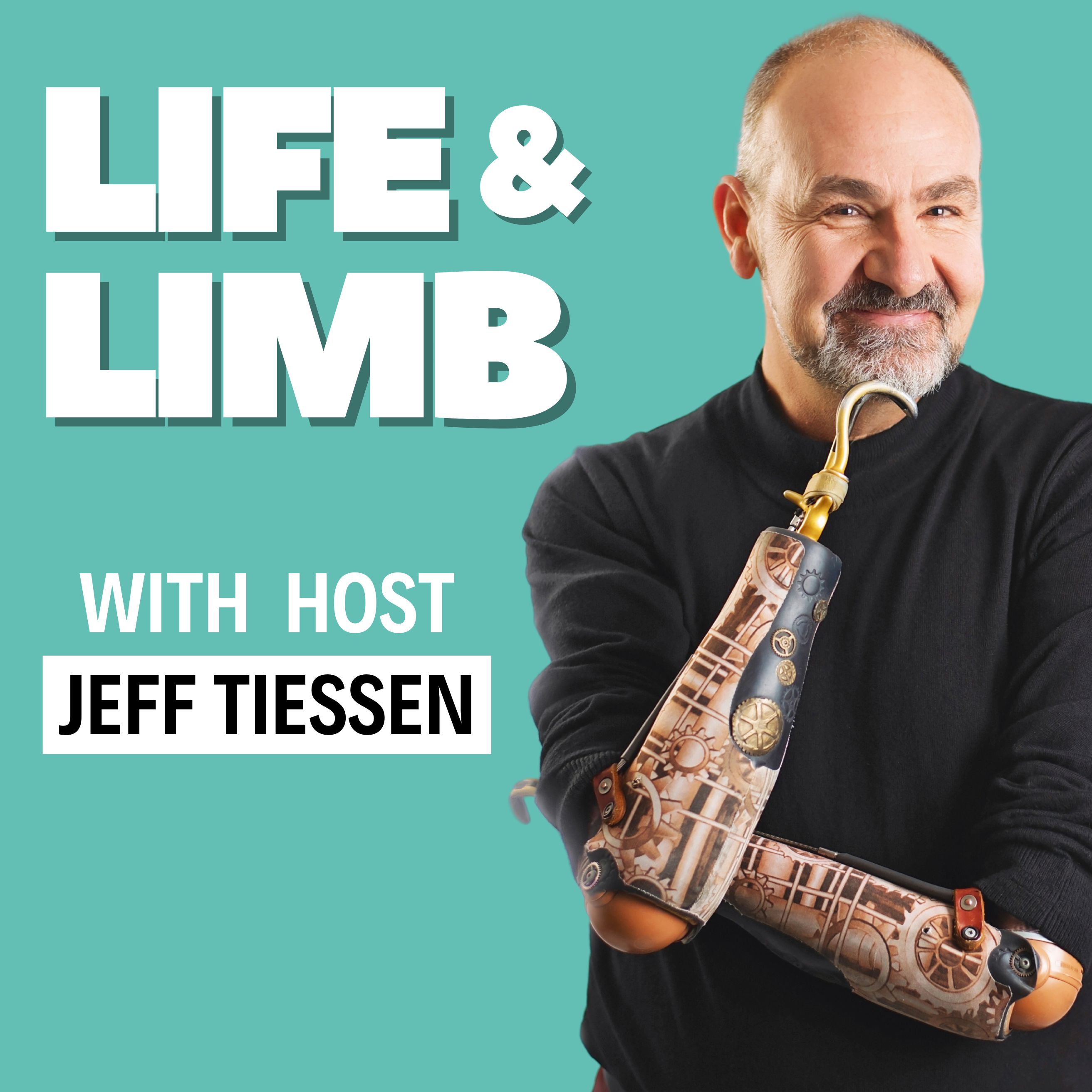
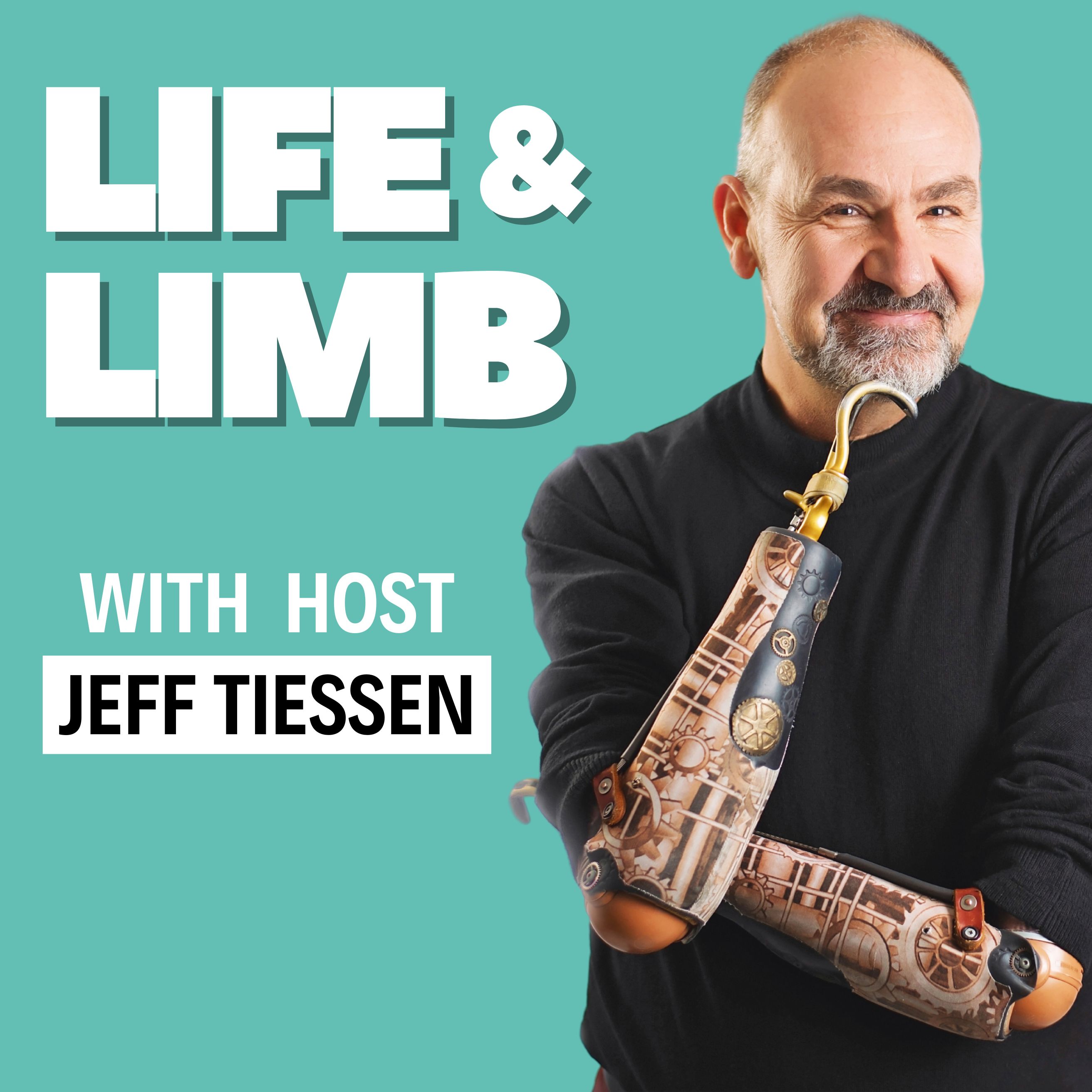
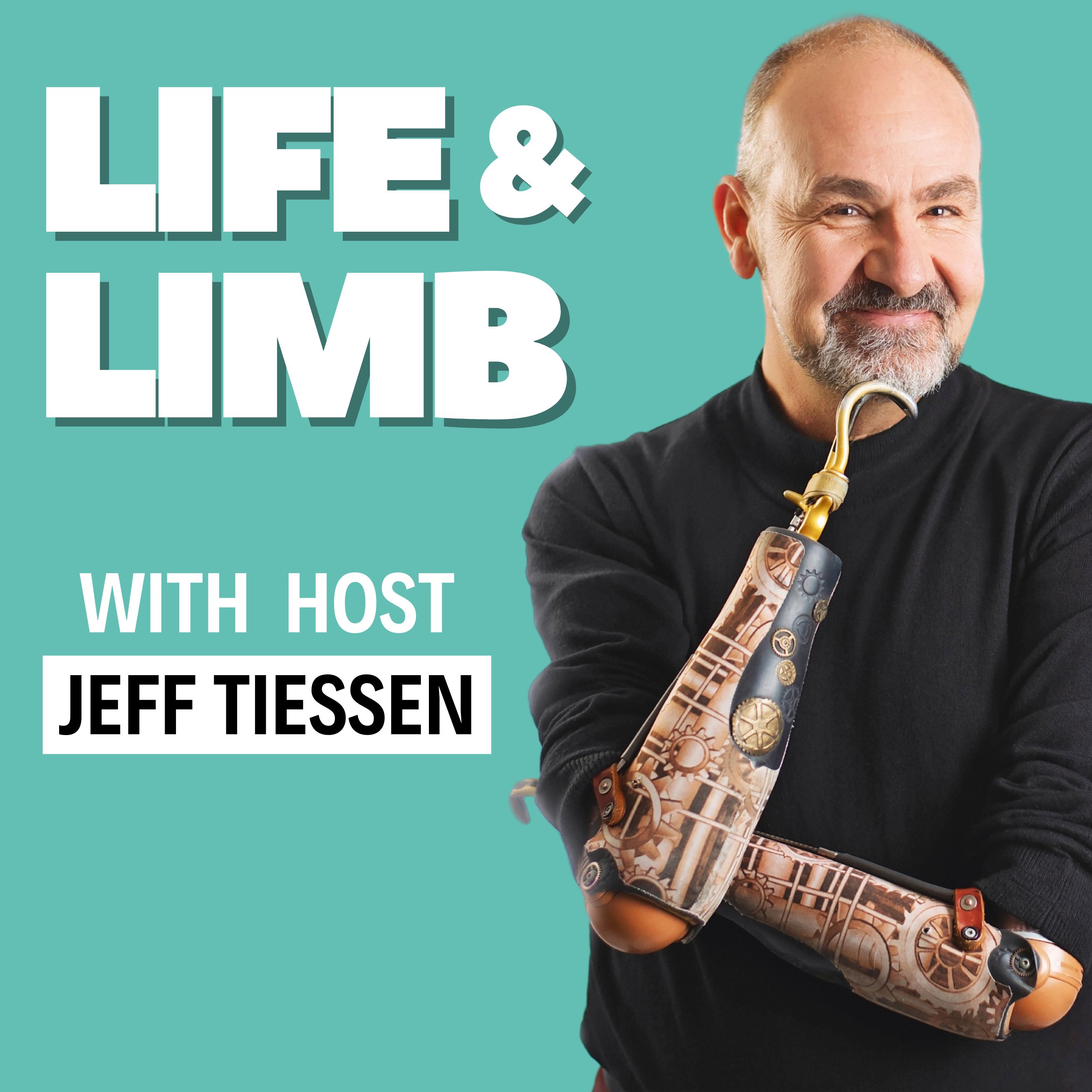
Welcome to Life and Limb podcast from Thrive Magazine. All about living well with limb loss or limb difference. I'm Jeff Thiessen, publisher of Thrive magazine and your podcast host.
My guest this episode is Port Moody, British Columbia's Stephen Vine.
Ten years ago, a medical tragedy changed his life completely.
He lost his sight, his right leg, took on chronic pain and diabetes management.
But what he didn't lose was his drive to fulfill his potential.
And what he gained was a mission to uplift the voices and victories of others in the community he found himself to now be part of.
A podcaster and a book author, Stephen moves beyond cliches about resilience and polished inspiration.
And he challenges the way we talk about strength by asking hard questions of ourselves and others. Stephen, welcome. How are you?
[00:01:03] Speaker B: Excellent. Thank you so very much having me on board with your podcast. And thank you as well, Jeff, for doing the podcast and having the citizens out there hear about all the things you talk about that are so important in recovery of all of us in the disability community.
[00:01:24] Speaker A: Well, thanks for that, Stephen, I appreciate it. And same to you. And we're going to talk about your podcast and in, in a little while. I, I want to start with your book, your, your memoir, Beyond Green Eyes. The day that I died is the day I started my new life. You know, in reading it, it is fascinating and it tells the remarkable story of how you survived life threatening medical emergency and, and really relearn to build your. Your life facing multiple disabilities. But before we delve into it and its messages for, for your readers, let's give it some context. You had a pretty intense childhood, a very athletic teen, teen years.
And as an adult, you were very driven. From what I gathered from the book, a self proclaimed workaholic maybe. And then suddenly, medical crisis changed everything. So how would you describe yourself then as, as a child or a teen or as that adult before your medical crisis, who were you?
[00:02:26] Speaker B: Well, like you said, I was a workaholic. And I, I think the way to put it is that I was driving my life was me driving a car.
And I was trying to drive my car as fast and as hard as it could go.
And then one day the car hit a brick wall and the combination of my lifestyle along with my genetics, because my aneurysm, my aorta was not proper.
My mother died of a very similar problem as a aaa and my sister also had a problem that she survived.
So my sister, one of my sisters and myself have survived this genetic problem, but my mother did not.
And so that's a Very important part of the equation as well as the lifestyle combination and everything gave one day and this is what's happened.
[00:03:34] Speaker A: But you were, as a teen, you were an 800 meter national athlete, right? Competing nationally, right?
[00:03:41] Speaker B: Yeah, I won the national champions championships as a teenager, 800 meters, I think I, I ran 151.5 as a 15 or 16 year old and I had a bright future with it. I started competing at a young age, around 10, nine or 10, somewhere around there it's single digits, nine I think. And my father was an, a very aggressive man in his own way and he, he really pushed me with my athletics and you know, by the time I hit 19, I was burnt out because I had already done a decade of competing at such a high level and I got out of athletics, I, I wish that I hadn't, but I did. And this is the way life goes sometimes.
And I got into the restaurant and hospitality at very high end hotels in Vancouver and I lived the lifestyle. I love the lifestyle of the hospitality business, of working your work, working as hard as you can during your shift and then going out and have a bit of a party with the girls and your co workers after work and all of that as well as my aorta situation, it all caught up to me and here we are now.
[00:05:09] Speaker A: Yeah. So that as you refer to it, a medical crisis, a medical emergency that happened one morning at work or on your way to work?
[00:05:18] Speaker B: Yeah, I got up in the morning, I worked breakfast shift at the Wedgwood Hotel in Vancouver here, one of the highest rated hotels in Canada.
And I woke up in the morning and I went to use the washer before I showered and, and I flushed the toilet and there was a lot of blood in the toilet. And I knew immediately, I hope this isn't too graphic what I've explained, but I knew right away there was something going on here and something wrong.
But with my workaholic attitude I just continued on my day and went into work. When I got to work, everyone, three people specifically came up to me and told me I did not look good and was I okay.
And I told everybody, yeah, I'm fine, I'm fine. And then boom. I had my AAA speaking to another employee of the hotel in mid conversation, fell to the ground, cut my skull open and they called an ambulance immediately, took me to the hospital immediately and I actually bled out for four and a half hours. I bled out and that's why the leg is missing, that's why I'm blind, because the blood didn't go to the leg, and it didn't go to the optic nerves. And the reason why I have a stoma is because they removed my colon because it didn't get the blood either, as well as my right glute.
So pieces of my body were removed. And I woke up after a four week coma and thought to myself, you know, I hear these voices. Why, why are the lights out but the lights worn out.
That was my first realization of, wow, I'm alive and I can't see anything.
[00:07:15] Speaker A: For the uninitiated, aaa, you said that, that
[00:07:18] Speaker B: abdominal. Abdominal aortic aneurysm.
[00:07:22] Speaker A: Got it. Okay. All right.
[00:07:24] Speaker B: Well, there's a lot of brain aneurysms that happen.
You can have aneurysms in a lot of your arteries.
That's where it starts. The wall of the artery thins out and the blood pressure you have forms a bubble at the lining of the artery. And then what happens is there comes a day where that bubble is going to pop, it's going to burst.
That's what an aneurysm is. And that's what happened to me on July 22nd as I was explaining to you. That bubble popped, I passed out, and it changed my life forever.
[00:08:06] Speaker A: Yeah, did it ever. And you described that in quite, quite a lot of detail in the book. It really takes people through that, that, that morning, you know, and in reading your book, it's not really about inspiration, it's about reality. And, you know, it was very clear that your survival was so much more than the physical fight that you were going through, but it touched everything. Your independence, your sense of self, how the world responds to you now. So were all those things that you were introduced to and then had to learn how to adapt to or manage, did you tackle them independently, meaning compartmentalize them and work through them, each on their own in their due time, or are they all laying on your workbench, so to speak, at the same time that you need to, to work through, understand,
[00:09:02] Speaker B: you know, to answer that as clearly as I think you want everyone to understand is I took it day by day, hour by hour.
Your emotional and psychological stability is all over the board.
First of all, you can't see anything.
So for 49 years, I had vision and all of a sudden I woke up and I couldn't see.
So now every single thing I had to do was in the dark.
And it's not that you're just in the dark. You don't see light anymore.
When you wake up, you have no idea what time it is.
Even 10 years later, I wake up. The first thing I say is, what time is it?
Last night I woke up, I had a nap. I thought it was this morning.
And I'm not. I'm not kidding.
[00:09:59] Speaker A: Right.
[00:10:00] Speaker B: And so you are completely blind. And now your right leg is amputated above the knee, and your bum on the right side is removed, and you can't walk.
You can only set, and it hurts to set.
And the nerve damage from the amputation is driving you nuts.
And I had to be taught how to eat again. I couldn't feed myself. Your motor skills after 28 days of a coma are kaputs.
And you have your partner or whomever, or the nurse or not the doctor, but somebody helping you eat. And then you. You learn it. And, you know, within my first two weeks, the social worker of the hospital came in and said, you know, you're going to have to learn your whole life over again.
This is like being a newborn child now in the stage of her life. And she was absolutely correct on that. You got to learn everything all over, but you can't do it methodically. Okay, I wake up today I'm doing a B, and tomorrow I'm doing D, E, and F. It doesn't really work that way because there's so many factors going on in your recovery.
It's impossible to structure things as clearly as that.
[00:11:28] Speaker A: Yeah, I see. It's not a straight line, that's for sure.
[00:11:31] Speaker B: It's not linear whatsoever.
[00:11:33] Speaker A: No, back to that nurse, I think you said that said you're gonna have to learn everything over you. You introduced the book in the book's bio, and with a really poign.
And it states what happens when your life ends but you're still here.
How long did you feel that way?
[00:11:56] Speaker B: Well, that's an interesting question, Jeff, because sometimes I catch myself talking and I've actually said, well, you know, when I died.
And then I continue, you know, when I died.
Isn't that funny that I say that? And I don't mean to. It's just in my back of my head, back of my brain, because I'm not the same guy I was before this happened. There's no way you can be the same person.
This is way too many adjustments.
I had a psychological evaluation after a few years because I tried to take my life.
And the psychiatrist and psychologist said I had an adjustment disorder.
So I developed a disorder because I had to adjust to the blindness, adjust to the missing leg, adjust to the stoma, adjust to the bum removed, adjust to diabetes. None of this was in my life until July 22, 2016.
[00:13:14] Speaker A: So when you talk about dying and the. It's in the title of your book, is that Stephen Vine 1.0, is that sort of a tribute or acknowledgment that that was you then and now?
[00:13:28] Speaker B: Yeah.
[00:13:29] Speaker A: Year 2.0. Is that.
[00:13:30] Speaker B: Yeah,
[00:13:31] Speaker A: yeah,
[00:13:31] Speaker B: yeah. I would say so. I would say that's about as close of a definition, if there is one, about why the title is put that way. Because, you know, a lot of things ended that day.
And I mean, you're. This show isn't long enough for me to list the amount of things that I don't do since that has happened and since before the accident.
It wasn't an accident, but I call it the accident because everyone can understand what I mean, you know, and.
Yeah, I mean, like, I can't even leave my apartment. Right. If I leave my apartment and get into the elevator and go downstairs, I can go out and there's traffic right outside my front door.
[00:14:21] Speaker A: Yeah.
[00:14:21] Speaker B: Well, I can't. I can't see it. I can hear it, but who knows if I'm going to get by the sidewalk? Okay.
So in the circumstances I'm in right now, I can't leave the apartment. My own front door of my apartment.
That does not sound like a big deal, but it's huge.
It's huge. And nobody will really get it until you are told you can't leave your apartment.
[00:14:47] Speaker A: Yeah, Right.
[00:14:48] Speaker B: When you've been able to do everything in your life for 50 years, anytime you want it. And now the first limitation is you can't see and you can't leave your apartment,
[00:15:02] Speaker A: let alone the fact that you would be leaving your apartment using a wheelchair, which can come with accessibility issues in and of itself that way, too, right?
[00:15:10] Speaker B: That's correct. That's correct.
[00:15:12] Speaker A: Yeah.
Frustrations and uncertainties, there were a lot of those shared in the book. But you did talk about moments of clarity, too, and you explored the difference between being looked after and actually being understood. Explain what you mean by that.
[00:15:32] Speaker B: Well, somebody can look after you but not understand you.
Somebody can make sure that you're fed and you're dressed, but they're not understanding the difficulty you are going through to achieve those tasks.
It's tough getting dressed that you can't see the clothes.
It's tough putting on a pair of pants. You only got one leg.
It's tough going to the washroom.
So, you know, I had to learn all these things, as I said earlier, and redo them in my own new world and everything was completely different.
Even though I was getting by, I was getting by in a real different way to accomplish things.
[00:16:28] Speaker A: Does
[00:16:28] Speaker B: that make sense?
[00:16:29] Speaker A: Well, it sure does. Yeah. That difference between just formal care and. And a real understanding empathy, I guess, might be what. What we're talking about.
[00:16:40] Speaker B: Well, and if I may, too, you know, I.
To be very honest with you, I was not thrilled with the medical community and how I was supposed to care of after my aaa. There was a lot of incidences that happened that were almost unbelievable that not only things were being said by people, but things that were not being done or being done and simply just being so frustrated at the medical individual not trying to understand that I'm a human being, not a robot. Right,
[00:17:21] Speaker A: yeah, right, right.
[00:17:23] Speaker B: And a human being is much different than a robot.
[00:17:27] Speaker A: Yes, we know. Although the lines are starting to blur, I think. But,
[00:17:31] Speaker B: yeah, that's true,
[00:17:32] Speaker A: isn't it? I think there's still a difference.
I don't want to keep talking about the book, and I won't. I'll kind of ask you a last question on it, because I really was fascinated with it. And in my job, I. I get the opportunity to read a lot of memoirs from the disability community, a lot of autobiographies, biographies, and yours just is so different and so real and honest and raw and vulnerable.
Why did you write this about yourself? Why did you write the book?
[00:18:03] Speaker B: I wrote the book because I wanted people to get inside my head.
I tried to put it all together so that you, the reader, would understand that this human being has been put through hell.
And maybe the next person that is going through what I'm going through or have gone through. No, no. What I am currently going through, because it doesn't end that the reader would be somewhat more understanding by hearing my story and then that next person. It might be a smoother ride.
It might be more understanding of why the person was maybe pissed off and upset, frustrated, fed up.
All these things that sometimes people look at you and go, what's your problem, huh? If you only knew.
[00:19:07] Speaker A: Yeah, yeah.
[00:19:08] Speaker B: You know when you tell people you're completely blind, do you know how many people have said to me, oh, yeah, and they have no idea how difficult it is living in the dark.
Like it is not easy.
I'm not here on your show to play a violin about how bad my life has been. I don't mean it that way. I'm just saying these things for people to be aware. The next guy in line that's missing a leg or is blind or whatever, he or she is going through that might be more than what you see.
[00:19:51] Speaker A: So definitely, in hearing you and listening to you, definitely more altruistic than cathartic. And I think so many of these books are written for, you know, cathartic reasons. This is really about helping other people understand.
Right.
[00:20:07] Speaker B: Yeah. And I gotta tell you, too, the. The book, the process of getting it together was very much like my podcast in. In a way that it was therapeutic.
It was therapeutic for me to get out what I was going through. It's therapeutic for me to interview you and ask you questions about not having any hands.
Even though I have my hands, there's still a commonality there with my leg gone.
Does any of that make sense?
[00:20:50] Speaker A: Yeah. Well, nicely pulled from my. My script to my. My next question for you was about that therapy piece. So we're. We're nicely aligned here. So let's keep talking about the podcast, the Disability Diaries podcast with Stephen vine.
[00:21:06] Speaker B: Yes.
[00:21:07] Speaker A: We've recorded 80. Or you have 80.
[00:21:11] Speaker B: I've recorded about 95 episodes, and I've released 77.
[00:21:16] Speaker A: And it's so eclectic. It's. I don't want to say it's all over the. The map. I mean, there's certainly a common thread through them all, but it.
You draw from people from all walks of life.
[00:21:28] Speaker B: That was my first idea when I came up. The fact I wanted to really actually do this was, you know, I was looking at what I wanted, and I wanted to hear different stories about different individuals, about different experiences, about different outlooks.
So right away, I applied that to my podcast. And believe me, there was more than just a couple of people saying, wow, you know, you got one person that's a doctor, the next person, their mother died of a disability, and you're asking what that was like for that individual. The next person is, you know, whatever. So it was, like, all over. And I wanted people to be stimulated. I didn't want people to hear a story about a blind man. A story about a blind man, A story about a blind man. I wanted to hear story about a blind man, story about an amputation, story about a disease. So the fact that if you're in the disabled community, you're getting your chance to tell people your story.
[00:22:38] Speaker A: Yeah, yeah. And your identity and how you manage it, and. Yeah. Your lived experience being different than every other. You said you're going to bring some. Some guests back, but more purposefully, because you're going to move toward exploring.
Excuse me. Specific topics. Am I right?
[00:23:00] Speaker B: Right. You are correct, sir.
So I'll. I'll add to that.
So I've put together my first series, which is about cancer. Cancer really disables you.
The first episode is about a woman that's fighting cancer currently. The second episode is a different woman that her cancer is in remission.
And the third out of the series is about a gentleman who lost his mother from cancer and talks about the effects and what he and his family and everybody had to go through with her ailment of her disability of dying from cancer.
So that idea is right there in front of you, the way I've explained it. And now we'll take it from cancer and go to another idea. I wanted to do something involving the Paralympics with disabled people.
I wanted to do another episode in the same series about the Special Olympics.
And then I wanted the third one to be the Invictus Games, so that now. Now there's a series about the disabled participating in athletics.
[00:24:28] Speaker A: Yeah. In all its varieties. And there are so many, too. I think in the. The world of Adapted Hockey, there's 10 or more different types of ways that people are playing hockey with different disabilities. So you'll have lots of content there to keep.
[00:24:43] Speaker B: Yeah, yeah. And so I. You know, you asked a little earlier about the eclecticism that I've brought right to the. To the stage. Well, I just thought that these series might take that almost to another level so that the listener is still interested.
[00:25:04] Speaker A: Yeah, absolutely.
Working with the. The silo of this podcast being about limb loss.
I mean, you've had, as you've described, much loss in your life, but when you talk about the loss of your right leg above the knee, you've said it's like losing a person. And you don't wear a prosthesis because of the extent of loss on your right side and the pain that comes with it. As you explained, do you think if you could replace what was lost with a prosthetic device, you might feel differently about it? Have you ever explored.
[00:25:40] Speaker B: Yeah, yeah, yeah. For sure, for sure.
I've said many times my right leg was like losing a friend when it was gone, and my left leg misses his buddy.
[00:25:56] Speaker A: I've never heard it put that way. That's. That's terrific.
[00:25:59] Speaker B: But it's true. My left leg misses his buddy. Like they were buddies, Right. One was on one side, one was the other. They were always together, and now one's gone.
And you continuously say, why?
What do you mean? I bled out for four and a half hours and the blood didn't get to the leg. This isn't supposed to happen.
The doctor should have Figured me out in 10 minutes what was going on. But that's not reality. They didn't do that.
And so this is the end result. You got to live with it.
You know, I say in the book and I say on my podcast the Big A, and that the add A is acceptance.
And acceptance is one of the biggest factors of moving on with the adversity you are facing from a disability.
And when you can start laughing a little bit, you know, not too much, you don't want to look nuts, but you start making some positive jokes here and there, you know, about something that's gone. It means you're accepting it now. It's not like you're, you know, making.
Belittling the situation at all or underwhelming it. You're. You're accepting the fact that that right leg is go. And you can joke a bit about it, but underlining, don't forget, you know, we miss him. We miss it. You know, and the pain that I go through has been very high.
I go through pain every single day of my life, and it's not just for minutes. It's for hours and hours.
And I've seen a numerous amount of doctors regarding my pain.
There's a couple of operations that are being proposed to me for the future, but I'm not sure if I'm going to qualify for these surgeries yet. And what I am trying to say to you is, because that pain is so present and prevalent every day, so is the leg.
It accentuates the fact that it's gone because the pain is a constant reminder it's been taken away.
[00:28:18] Speaker A: Yeah, I was gonna say reminder.
[00:28:20] Speaker B: Yeah.
[00:28:22] Speaker A: You've tried wearing a prosthetic device, right? It's just two
[00:28:26] Speaker B: years. Two years. I. I tried, and. And I did pretty good.
A lot of people out in public were like, what are you doing? Because they could tell I had the sunglasses on. I was blind, right? And I was going down in an area here, New Westminster. There's a key there. And I'd walk down the railing, and I would hold the railing on with one of my hands and walk with the prosthetic down the railing. And not just. Not just 10 or 20ft. We're talking like 100 meters.
And then turn around and come back, and I went into a couple of establishments with the prosthetic leg and with me holding on to some. A friend of mine's shoulder.
And the last time I did it, when I took that prosthetic off the. The pain was so unbelievable. There was no way I could Continue.
And I am a man of pride and I do not like to give up.
And I had to throw in the towel. There was no way I was going to be able to continue it. It was just two much. And in the back of my mind, it bugs me every day that I don't have that I don't want to sit in a wheelchair.
[00:29:48] Speaker A: Yeah, that is not a choice, obviously, with.
[00:29:52] Speaker B: And people. People do talk to you much differently when you're standing with a prosthetic leg as compared to sitting in a wheelchair.
[00:30:01] Speaker A: Just the height,
[00:30:03] Speaker B: just the heights. Yeah. People, they see the wheelchair and they change.
They don't talk to you the same way. They have preconceived notions about what you're like when they don't even know what you're like. But they've seen bad examples of people in wheelchairs before.
[00:30:22] Speaker A: Well, we could do a whole nother episode on unconscious bias and stereotyping and microaggressions and all the rest of it. Right.
[00:30:30] Speaker B: But, but did I, did I get to you enough about the leg missing or is there anything else that maybe I can talk about to make it more clear? I don't know.
[00:30:41] Speaker A: No, I think you did a nice job. I mean, that analogy of losing your left. Left leg, losing a friend.
Yeah, that's an interesting take. And yeah, the fact that this, it just isn't really a viable option for you based on comfort level and pain. Too much, I think you said. And it's something I wanted to also talk to you about, which you explained to me was too much was time alone. And maybe more than that, the isolation that, that you experienced through this journey. And you know, we've all felt alone at times, but that's different than isolation.
But I'll let you explain that you experienced it in a really unique way. So what was that like? And, and you said it changed you. How did it change you?
[00:31:32] Speaker B: Well, let me paint the scenario real quickly here.
A short time after the accident, I was no longer in a relationship. I was now alone.
And I had been in a relationship for numerous years, almost 20.
And the relationship was over.
And the hardest part was actually my stoma, because the combination of a bag on your stomach retaining your feces and not being able to see is not a good combination.
And that was to say frustrated is the understatement of the year.
[00:32:20] Speaker A: Yeah,
[00:32:20] Speaker B: it was extremely difficult getting control of that.
And that was only one aspect of it.
And the scenario is I was dealing with that and my other ailments and I was suddenly in long term Health care.
The individuals in that facility were at least 40 years older than I was.
None of them were blind.
It was an environment I should not have been in.
The medical individuals in that facility, they did not treat me very good.
They didn't treat me very good at all.
I don't want to go and start telling you 10 stories of incidents that happened, but they did happen, and it was extremely lonely.
Sitting in the dark, in pain, with nobody helping you.
Your phone isn't ringing, you're trying to sleep.
One of the staff members wakes you up by coming into your front door. And then you ask who it is.
They don't answer you back.
You can hear them in your suite. So you decide to get up and they leave before you can find out who they are.
There was games that were being played and that really accentuated the isolation because I wasn't in an environment where people were trying to work with me.
And so that, if that makes any sense, is what made my isolation so, so difficult to get through.
[00:34:13] Speaker A: Yeah, the, the examples that you give 10 or more in, in the book, and they're just jaw dropping that this can happen in, you know, in a long term, any, any healthcare residence, institution. But you're. You have your own apartment now.
[00:34:30] Speaker B: Now I live on my own. Yeah. But, you know, getting back to that real quick, Jeff, what I did want to let everyone know is that you lose friends.
I was dependent upon a lot of strong drugs when this all started, and one of them was OxyContin.
And I got off the OxyContin. I haven't taken it in years. I quit cold turkey. I just said, that's it. I'm not taking this anymore.
I ended up in the hospital and the doctors said, you should not have done that. That is not good for your cardiac situation.
I still did it because I was trying to eliminate anything that was negative and bringing me down to being the most positive human being I could be.
And so all these changes were going on. And, you know, sometimes the individual sees that you're taking a painkiller and automatically labels you as a bad person when you're not. It's just that your pain is that bad and nobody understands it until you run into somebody that's going through the same thing.
[00:35:48] Speaker A: Yeah. And again, a nice segue in how you're. You're helping others. But kind of last question for you, Stephen. When we've chatted you, you've talked about wanting to, to try and find ways to be a better advocate for yourself and for the disability community.
[00:36:03] Speaker B: Yes,
[00:36:04] Speaker A: and we know advocacy takes on all kinds of shapes and, and forms. So what does that mean for you? What, what would be being a better advocate look like for you and for others?
[00:36:15] Speaker B: Well, I, I, I don't know. I, you know, you asked me a couple minutes ago, you know, do I live on my own? And I do, I, I do live on my own and I, I get professional help during the day for five out of seven days and actually seven out of seven days because someone else covers those two days.
Anyways, to make a long story short, I want to say to other people out there that you can do it too. If I can do it, you can do it. My motto for the podcast is, if you can do it, do it.
And don't always just say, well, you know, I can't do that. My, my leg's gone. You know, I can't do that. I can't. See, sometimes you have to say that, but not all the time.
And I want to show people that, that independence you can still achieve.
And if they listen and see what I'm doing and bringing on individuals that are striving and thriving with their disability, then maybe that'll keep people motivated and staying hungry to do their best.
[00:37:31] Speaker A: Wow. What a powerful message. Great sign off message too. And I love that you use the word motivated instead of inspired. Those are two very different things. And yeah, congratulations and all the, well, how far you've come with the challenges and complexities in front of you, but the great work that you've done and absolutely I highly recommend the book and I want to share your website here for people to get it. So thank you, Stephen. Such a unique story, such a unique journey of adaptation and contribution too. So folks, if you want to reach out to Stephen, visit his
[email protected]. and that's Stephen with a V, not a Ph. That's
[00:38:18] Speaker B: correct,
[00:38:19] Speaker A: Stephenvine. Ca.
And with that, this has been life and limb. Thanks for listening and you can read. Thank you. Thank you, Stephen. It's been great having you. Great having you
[00:38:30] Speaker B: and, and I really appreciate you letting me have my voice about what I've done and my book and I hope all the listeners out there give the book a chance. Thanks, Jeff.
[00:38:42] Speaker A: Yeah, I really would encourage you to. There was so much in it for, for me as someone who's been an amputee for 50 years, I could still resonate with some of those emotional challenges and, and the way you work, work through them. So yeah, please do pick it up, stevenvine. Ca and you can read about others who are thriving with limb loss or limb difference, and plenty more at Thrive Mag Ca. And you'll find our previous podcast episodes there, too. Until next time, Live well.